Crusoe Hits $30B Valuation in $3B AI Data Center Raise
AI data center builder Crusoe raised over $3 billion at a $30 billion valuation, roughly tripling its worth in ten months as Mubadala and others piled in.
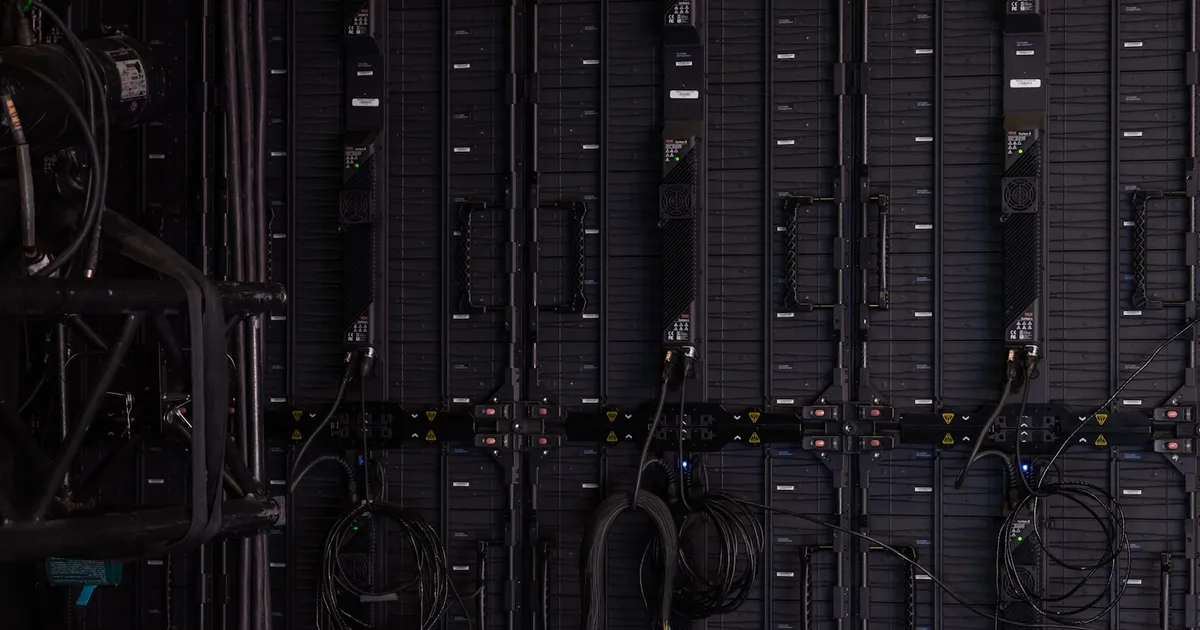
The money chasing AI infrastructure keeps finding new records. Crusoe, the AI data center developer that has become one of the industry’s fastest-growing builders, has raised more than $3 billion in fresh funding at a $30 billion valuation, according to reports on September 3, 2026. The round roughly triples the company’s valuation in the space of about ten months — a pace that captures both the ferocity of demand for AI compute and the willingness of investors to underwrite it.
The financing had not been formally announced by Crusoe as of reporting, so the final size and terms remain unconfirmed. But the contours are striking enough on their own: a company valued at roughly $10 billion last October is now, by these accounts, worth three times that.
The round and the backers
The raise is being co-led by Atreides Management and Valor Equity Partners, with participation from Mubadala Capital, the investment arm tied to Abu Dhabi’s sovereign wealth complex, according to reports. The involvement of Gulf capital is itself a theme of the current cycle: sovereign funds from the Middle East have become some of the most aggressive financiers of AI infrastructure, drawn by long-duration contracts and the scale of capital these projects require.
The step-up is dramatic. Crusoe raised a $1.38 billion round at a $10 billion valuation last October. Ten months later, a $3 billion-plus raise at $30 billion implies investors believe the company’s contracted pipeline and build-out capacity have grown fast enough to justify tripling the price. In a market where AI data center economics hinge on securing power, land, chips, and tenants years in advance, valuation increasingly tracks the size of the backlog a builder can lock in.
What Crusoe actually does
Crusoe designs, builds, and operates data centers purpose-built for AI workloads — the physical plants where training and inference run on racks of GPUs. Its customer roster reads like a who’s-who of the compute-hungry: the company counts Meta, Microsoft, and OpenAI among its customers, according to reports.
The fresh capital follows a roughly $13 billion, five-year cloud contract with Jane Street, the quantitative trading firm that has become an unlikely but heavyweight buyer of AI infrastructure. That deal matters for two reasons. First, it is enormous — a multi-year, multi-billion-dollar commitment that gives Crusoe the kind of contracted revenue lenders and equity investors want to see before writing large checks. Second, it signals that demand for high-end compute now extends well beyond the frontier labs and hyperscalers into finance, where firms like Jane Street are willing to sign cloud contracts at a scale that once belonged only to Big Tech. Jane Street has surfaced elsewhere in the AI buildout too, including its backing of custom-silicon startup Etched.
A valuation built on backlog and debt
Crusoe’s leap is not happening in isolation. It is the latest data point in a “neocloud” boom — a wave of specialized AI infrastructure providers that rent GPU capacity to labs and enterprises, growing on the back of the hyperscaler capex surge that has defined 2026. Rivals in the category have seen similar investor enthusiasm, from Nebius’s neocloud rally to Vantage’s data center IPO.
That enthusiasm rests on a specific structure. Neoclouds typically sign long-term contracts with a small number of very large customers, then use those contracts to raise the debt and equity needed to buy chips and build facilities. The model can compound quickly when demand is booming: each new anchor tenant unlocks more financing, which funds more capacity, which attracts the next tenant. Crusoe’s trajectory — a $13 billion anchor contract followed weeks later by a valuation-tripling equity round — is that flywheel in action.
The same structure is what makes the category worth watching carefully. Valuations this size are underwritten by the assumption that AI compute demand stays strong for years and that anchor customers honor multi-year commitments. Both are plausible today. Both are also the kind of assumption that looks very different if AI spending cools or if a major customer renegotiates.
Concentration cuts both ways
Crusoe’s customer list is a strength and a risk in the same breath. Having Meta, Microsoft, OpenAI, and Jane Street as tenants gives the company credibility, scale, and contracted revenue that few competitors can match. It also means a large share of Crusoe’s business depends on a handful of counterparties whose own AI spending plans are subject to change.
That concentration is characteristic of the neocloud model rather than unique to Crusoe, and it is one reason these companies are financed the way they are: long contracts exist precisely to give lenders and investors confidence that the revenue is durable. But the buildout is also increasingly financed with debt secured against those contracts, and the industry’s growing reliance on off-balance-sheet and contract-backed AI debt is a structure that has never been tested through a downturn.
There is a physical dimension to the risk as well. A data center is only useful if it has power, and the biggest constraint on the entire buildout is no longer chips but electricity and the grid interconnections to deliver it. Builders like Crusoe are competing not just for GPUs and capital but for megawatts, and the timelines to secure power can stretch years. A valuation that assumes a pipeline of facilities coming online on schedule is implicitly a bet that the power, permits, and construction all land on time — a bet the broader hyperscaler capex wave is making at unprecedented scale.
What it means
Crusoe’s tripling to a $30 billion valuation is a clean read on where private capital thinks AI infrastructure is headed: up, and fast. The involvement of Mubadala alongside Atreides and Valor, on top of a $13 billion Jane Street contract, shows that the deepest pools of capital — sovereign funds, crossover investors, and quantitative trading firms — are all converging on the same bet, that whoever controls AI compute capacity controls a scarce and valuable resource for years to come.
The immediate winners are clear. Crusoe gets the capital to keep building; its existing backers see a fast markup; and the broader neocloud category gets another proof point that anchor contracts can be spun into eye-watering valuations. The chip and power suppliers feeding these builds win too, as every new facility means more orders.
The risks are the mirror image of the model’s strengths. Valuations underwritten by long-term contracts assume those contracts hold and that AI demand keeps climbing. Concentration among a few giant customers means a single renegotiation or spending pullback ripples straight through the financing. And the debt increasingly layered into these projects amplifies both the upside and the downside.
What to watch next: whether Crusoe formally confirms the round and its terms; whether the neocloud markups continue or start to plateau as more capacity comes online; and, above all, whether the anchor customers powering these valuations keep spending at the pace the whole structure assumes. For now, the market’s answer is a resounding yes — priced, in Crusoe’s case, at thirty billion dollars.
Tagged
Keep reading
 Kurumi · · 6 min read
 Fluidstack Hits $18B Valuation on AI Data Center Boom
Fluidstack, an Oxford-founded neocloud backed by Google, has reached a roughly $18 billion valuation on the back of a ~$50B Anthropic deal and Google TPU hosting.
 Kurumi · · 5 min read
 Vantage Data Centers Eyes $100B IPO or Sale
Vantage Data Centers is weighing an IPO at about a $100 billion valuation or an outright sale, in what would be the largest data center listing to date.
 Chisato · · 5 min read
 Nvidia Australia AI Factories: 2 GW Buildout by 2027
Nvidia lined up eight Australian data center operators to build up to 2 GW of AI factory capacity by 2027, roughly doubling the nation's compute footprint.