Etched Raises $700M at $21B Valuation From Jane Street
Etched raised $700M led by Jane Street at a $21B valuation, doubling in a month, and shipped its first Sohu inference rack. The deal and the risks.
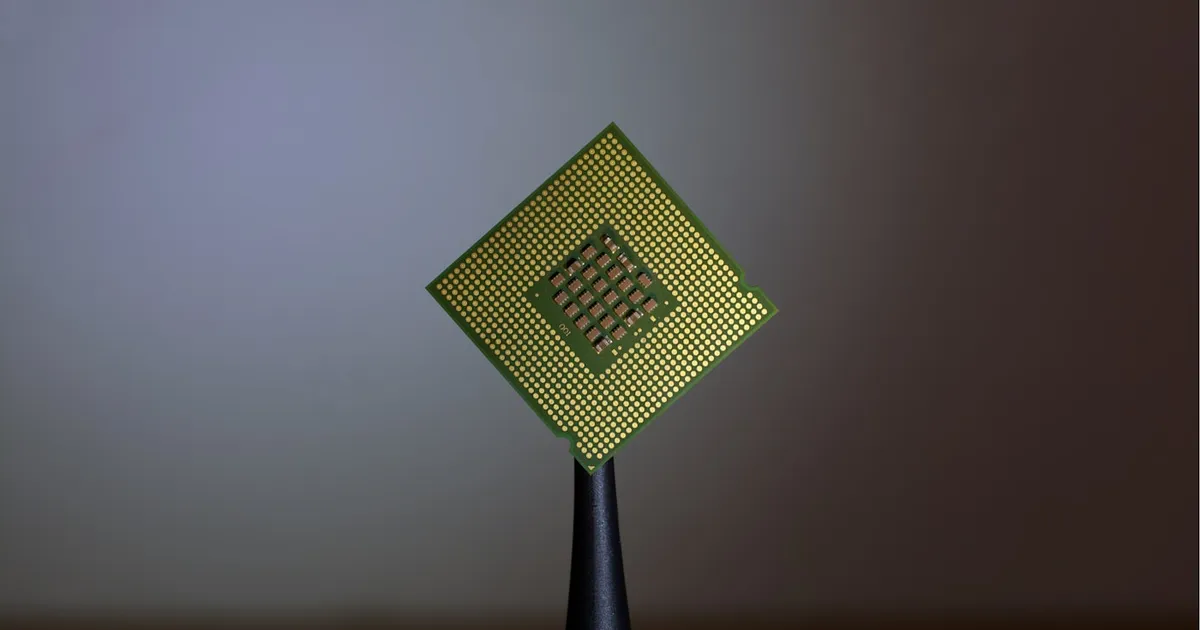
The market’s bet against Nvidia’s grip on AI compute just doubled in price — again. On August 18, 2026, Etched, the startup building a chip designed to run AI models rather than train them, said it had raised $700 million in a round led by the quantitative trading firm Jane Street at a valuation of roughly $21 billion. The company also said it had shipped its first server rack to Jane Street, which is both the round’s lead investor and a paying customer.
The valuation is the headline. Etched set a $10.3 billion mark with a $300 million Series C in late July. One month later, the price has roughly doubled. It is one of the steepest private-market repricings of a cycle that has produced many of them.
From stealth to $21 billion in weeks
The step-ups have come almost too fast to track. As recently as June 30, 2026, Etched exited stealth at a $5 billion valuation, disclosing roughly $800 million raised to date. Weeks later it was reportedly in talks at around $20 billion while separately raising at about $10 billion — an unusual pattern of stacked rounds at different prices that has become a signature of the AI boom. The $10.3 billion Series C confirmed the lower of those marks in late July; the new $700 million round confirms the higher one.
The latest financing drew a roster of well-known names alongside Jane Street: Kleiner Perkins, Sequoia Capital, Andreessen Horowitz, Peter Thiel, Bain Capital Ventures, and Blackstone. The presence of Blackstone, an alternative-asset manager, is a reminder of how far beyond traditional venture capital the AI infrastructure trade has spread.
The Sohu bet
Etched’s entire company rests on a single wager: that the transformer — the architecture underpinning nearly every large language model — has stopped moving enough that it is worth burning into silicon. Its chip, Sohu, is an ASIC, an application-specific integrated circuit built to do one thing. Where a GPU is a general-purpose processor that can run almost any workload, Sohu strips out the circuitry Etched believes transformer inference does not need and pours that silicon into the specific calculations a model performs when generating output.
The trade-off is stark. If transformers remain dominant, Sohu can in principle deliver far more inference per watt and per dollar than a general-purpose GPU, because it wastes nothing on flexibility. If the field moves to a materially different architecture, a chip hardwired for transformers ages badly. Etched, founded in 2022 by Harvard dropouts Gavin Uberti, Chris Zhu, and Robert Wachen, has now raised billions on the first half of that bet.
The company has staffed up to make it. Etched employs roughly 400 people, with engineers drawn from Nvidia, Broadcom, Google’s TPU team, and SK Hynix — a talent base assembled precisely from the incumbents it is trying to undercut.
A named customer changes the story
What separates this round from the earlier ones is a shipping product with a named user. Etched said it delivered its first rack to Jane Street, and the trading firm confirmed publicly that one of the racks is now running in its own data center. Jane Street’s dual role — lead investor and deployed customer — is the kind of validation the AI-hardware market has been starved of, because credibility in this business turns on getting silicon into a real workload, not on a roadmap.
Etched has said it holds more than $1 billion in signed customer contracts across public and private “frontier” AI companies and clouds, and that it has begun shipping. It has not, however, announced revenue. That distinction matters: contracts and shipments are leading indicators, but the company is still being priced on what its chip will earn, not on what it has earned.
The valuation question
At $21 billion, Etched is valued like an established supplier while operating like an early-stage one. The bull case is straightforward: inference — running models in production, not training them — is where the durable, recurring compute demand lives, and a chip that does it more cheaply than an Nvidia GPU could capture a large, structural market. Jane Street putting its own workload on a rack is a data point in favor.
The bear case is equally clean. Etched makes exactly one kind of chip, for exactly one architecture, and its entire thesis fails if inference workloads diversify or if Nvidia and AMD close the efficiency gap with their own inference-tuned parts. It is not alone in chasing this market — AMD has been buying its way into custom inference silicon, and a wave of photonic and specialized inference startups is targeting the same demand. Concentration risk cuts both ways: focus is Etched’s advantage and its exposure.
What it means
Etched’s repricing is a clean read on where AI-infrastructure investors are placing their chips: on inference, on specialization, and on anything credible that could loosen Nvidia’s hold on the compute layer. A four-fold move from $5 billion to $21 billion in under two months is not a judgment about this quarter’s revenue — Etched has disclosed none — but about the size of the inference market and the odds that a transformer-only ASIC captures a slice of it.
The winners, if the bet pays off, are the customers and clouds that gain a cheaper alternative to GPUs for running models at scale, and the investors who bought early. The party most exposed is Nvidia, whose inference franchise is the target — though Nvidia’s own dominance and its move to mobilize hundreds of billions in third-party capital for AI infrastructure leave it far from cornered. The subtler risk sits with Etched itself: a valuation this rich compresses the margin for error to nearly zero.
What to watch next: whether Etched converts its $1 billion-plus in contracts into disclosed, recurring revenue; whether a second named customer follows Jane Street into production; and whether transformer architectures stay still long enough to justify hardwiring them into silicon. For now, one trading firm running one rack has been enough to double the price. The market is buying the thesis. The chip still has to earn it.
Tagged
Keep reading
 Kurumi · · 5 min read
 Marvell Q2 Earnings: Record $2.74B, Raised Guidance
Marvell posted record Q2 FY2027 revenue of $2.74B on a 46% data center surge, raised its outlook again, and guided Q3 to $3.15B. The numbers and what they mean.
 Kurumi · · 5 min read
 Nvidia AI Server Prices to Rise 15%+ on Memory Costs
Nvidia's server builders have told Microsoft, Google and Oracle that Vera Rubin and Grace Blackwell system prices will climb more than 15% from early 2027 as memory costs soar.
 Kurumi · · 7 min read
 Google, Marvell Sign $12.2B Custom AI Chip Warrant
Marvell gave Google a warrant for up to $12.2B in shares tied to custom AI chip sales through fiscal 2033. The deal, the vesting, and the read-across to Broadcom.