Veeda AI Raises $90M+ Seed for Physical-AI World Models
Ex-Nvidia AI research VP Sanja Fidler's stealth startup Veeda has raised over $90M in seed funding from Khosla and Radical to build world models for robots.
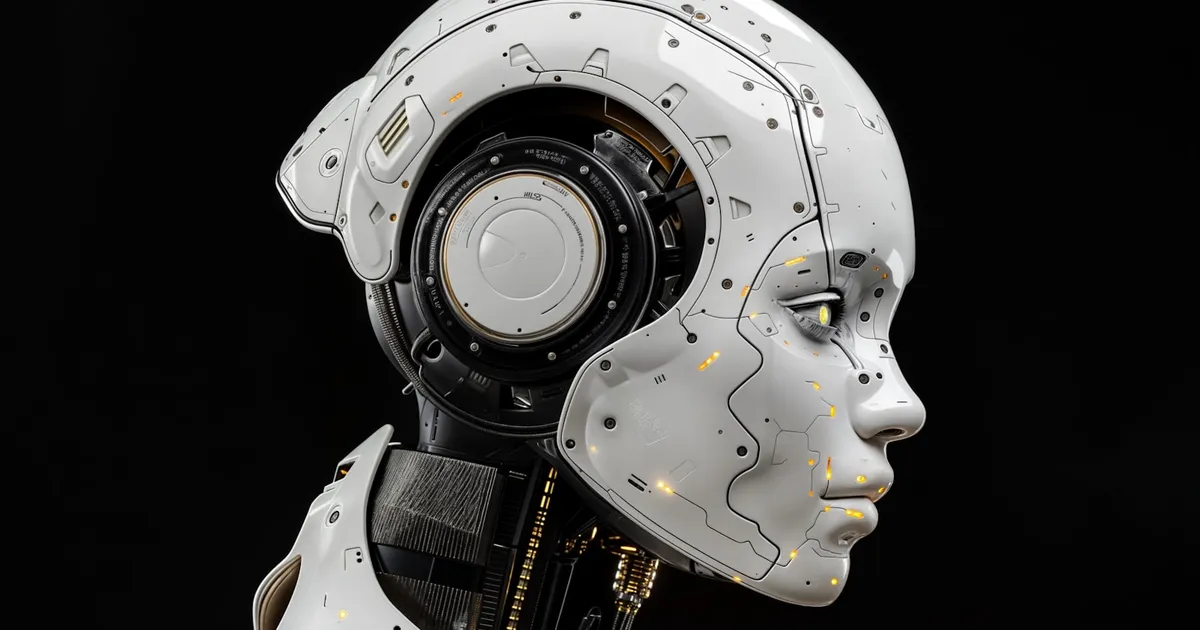
The former head of Nvidia’s Toronto AI research lab has emerged with more than $90 million in seed funding for a startup building the piece of the AI stack that everyone in robotics currently complains is missing. Veeda AI — the new company from Sanja Fidler, previously Nvidia’s vice president of AI research and the founding leader of what became its Spatial Intelligence Lab — closed the round with Khosla Ventures and Radical Ventures as lead investors, according to disclosures reported on August 19, 2026. PitchBook data cited by The Logic places the raise among the three largest seed deals in Canadian history.
The company is building what the field increasingly calls world models: multimodal foundation models that predict how the physical world responds to actions, so that an embodied agent — a humanoid, a mobile manipulator, an autonomous vehicle — can be trained inside a fast, cheap simulator instead of learning through millions of costly failures in the real one. Veeda incorporated in early June 2026 and issued 60.6 million seed shares priced at $1 each in late July, and it lists offices in Toronto, Mountain View, Singapore, and Zurich.
Who is building it
Veeda’s founding team is essentially the Toronto research nucleus that Fidler ran inside Nvidia for eight years. Alongside Fidler as chief executive are Huan Ling as chief scientist and Zan Gojcic as chief technology officer, both former Nvidia researchers who worked with her on the group that became Nvidia’s Spatial Intelligence Lab. Fidler announced her departure from Nvidia the week before the seed round became public.
Two new directors joined the board with the round: Radical Ventures partner Tomi Poutanen and Khosla Ventures partner Sven Strohband. Both are veteran early-stage backers of AI infrastructure companies, and their presence signals what Veeda is being funded to build — a foundational layer, not a vertical robotics product.
Fidler is one of the more recognized names in academic 3D vision and neural simulation, with a research group at the University of Toronto and years leading Nvidia’s push into synthetic-data generation and generative 3D scene models. That the whole team has left together, at once, with a nine-figure seed check, is itself the story: it is the largest, most credentialed spin-out from a major AI lab into the physical-AI category in this cycle.
What Veeda’s world model has to do
The pitch for world models is straightforward and, until recently, mostly aspirational. Robots learn slowly, expensively, and dangerously in the real world; a good enough simulator turns training into a data-generation problem instead of an operational one. The catch is that “good enough” here is a very high bar. A useful world model has to produce photo-realistic sensor observations consistent enough to fool a perception stack, obey physics faithfully enough that contact and friction transfer to real hardware, and remain controllable enough that a policy learned in simulation carries over — the classic sim-to-real gap.
Everyone in embodied AI has been reaching for that combination. Nvidia’s own Cosmos platform is a stab at it, aimed at exactly this workflow; DeepMind and Google Research have published a stream of generative video and 3D world-model papers over the past two years; and startups from World Labs to Physical Intelligence have raised heavy rounds on adjacent theses. What differentiates Veeda’s pitch, at least on the fund-raising deck, is a bet that a single multimodal foundation model — trained across image, video, geometry, and control data — can generate the simulated worlds directly, rather than composing a pipeline of specialized models and physics engines.
If that works, the payoff is not “a slightly better simulator.” It is that policy training for a general-purpose humanoid or manipulator becomes a data problem you can solve by scaling compute, in the same way large language models became a data problem you could solve by scaling compute. That is the analogy the entire physical-AI category is chasing, and it is the reason the seed round is nine figures for a three-person team.
Why the check is this big
Nine-figure seeds are unusual, and they are unusually concentrated in a small number of theses. Physical AI is currently the most concentrated of them. Crunchbase counted $47.4 billion in physical-AI venture funding globally in the first half of 2026 across 521 deals, roughly a fourfold jump from the second half of 2025, and the deal sizes at the top of that market have been closer to Series C rounds than to traditional seeds.
The logic on the investor side is that world models sit in the same structural position for embodied AI that foundation LLMs sat in for text and code five years ago: a scarce, capital-intensive layer that every downstream application will need to buy or copy, and where the winners will be the labs with enough compute, talent, and data to train the biggest, most general models first. That is a category thesis that fits Khosla and Radical’s history, and it fits Fidler’s résumé closely enough that a nine-figure seed is not, in the current environment, an obvious anomaly.
The broader physical-AI competitive picture is crowded and consolidating fast. Nvidia has spent the last two years positioning Isaac, Cosmos, and its GPU rack platforms as the reference stack for robotics simulation. Humanoid makers like Figure, Agility Robotics, and China’s AgiBot and Unitree are racing to put actual metal in warehouses and factories — see the AgiBot-Unitree shipment leadership swap and the Agility Robotics SPAC deal. Google has pushed forward with Gemini Robotics 2 for whole-body humanoid control. The economics of humanoid deployment still hinge on whether training costs — and the amount of physical hardware wear that training implies — can be pushed down to where a unit of robot labor actually competes on cost with a human. World models are the piece of the stack that most directly attacks that number.
The Canadian angle
For Toronto in particular, the raise is a notable milestone. The city has been a foundational site for modern AI — Hinton’s group, the Vector Institute, the pre-Nvidia version of Fidler’s own lab — but has historically watched the commercial value of that research flow to Silicon Valley companies whose Toronto offices did the science but not the business. A nine-figure seed for a Toronto-headquartered company, led by an ex-Nvidia VP, backed by two of the most active AI investors on the coast, is the kind of transaction that gives the local ecosystem a home-grown flagship on its balance sheet rather than someone else’s.
The four-office footprint — Toronto, Mountain View, Singapore, Zurich — signals that Veeda expects to hire against the global pool of 3D vision and robotics researchers rather than confine itself to any one talent market. Zurich in particular is a longstanding center for robotics and perception research; Mountain View is where the customers, in the form of the humanoid and autonomous-vehicle companies, are concentrated. A seed round this size funds the choice not to pick one.
What it means
Who wins if it works: the humanoid and general-purpose-robot companies whose economics depend on their training bill collapsing. Every one of them is currently building or licensing its own simulator; a shared foundation-model layer that is decisively better than an in-house build turns simulation from a cost center into a supplier bill and lets the robot companies focus on hardware and policy work. If Veeda’s model is state of the art, the robot makers become customers, and the winners of the humanoid race stop being the ones with the best internal simulator.
Who’s exposed: Nvidia most directly. Cosmos and Isaac are meant to be the neutral platform layer for physical AI, and a highly credentialed spin-out from the same company launching a foundation-model competitor with nine-figure funding is the sharpest public signal so far that the platform bet is not going uncontested. Independent simulator vendors and physics-engine specialists — the companies whose business model assumes that customers will assemble a pipeline of best-in-class components — are similarly exposed if a single generative model turns out to do the job well enough.
What to watch next: three things. First, whether Veeda ships anything the field can benchmark inside twelve months — world-model claims are cheap; a demo you can drive a policy through is not. Second, how the next tier of physical-AI raises price — this seed sets a ceiling that other founders will point to, and a repricing of the whole category is more likely than a return to conventional seed math. Third, which robot company signs first. A named humanoid or autonomous-vehicle customer taking Veeda’s model as its training substrate is the fastest path from a nine-figure seed to a real business, and it is the announcement most likely to move the physical-AI funding wave another notch.
Keep reading
 Kurumi · · 6 min read
 XPeng Robotics Raises $900M at $6.3B Valuation
XPeng's robotics unit raised over $900M at a $6.3B valuation to scale its IRON humanoid — the largest embodied-AI funding round on record in China.
 Kurumi · · 6 min read
 Starcloud Raises $250M for Orbital AI Data Centers
Starcloud raised $250M at a $2.3B valuation, with Nvidia joining, to build AI data centers in orbit. Why space compute is drawing capital now.

 Chisato · · 5 min read
 Higgsfield $400M Series B: AI Video Hits $5.4B
AI video startup Higgsfield raised $400M at a $5.4B valuation, led by DST Global with Goldman and Intel. Revenue hit $700M annualized, up from $20M a year earlier.