Samsung Foundry Price Hike: Up to 15% on AI Demand
Samsung raised advanced contract chip prices by up to 15% as AI demand fills its 4nm and 5nm lines. Chinese customers face the steepest hikes. What it means.
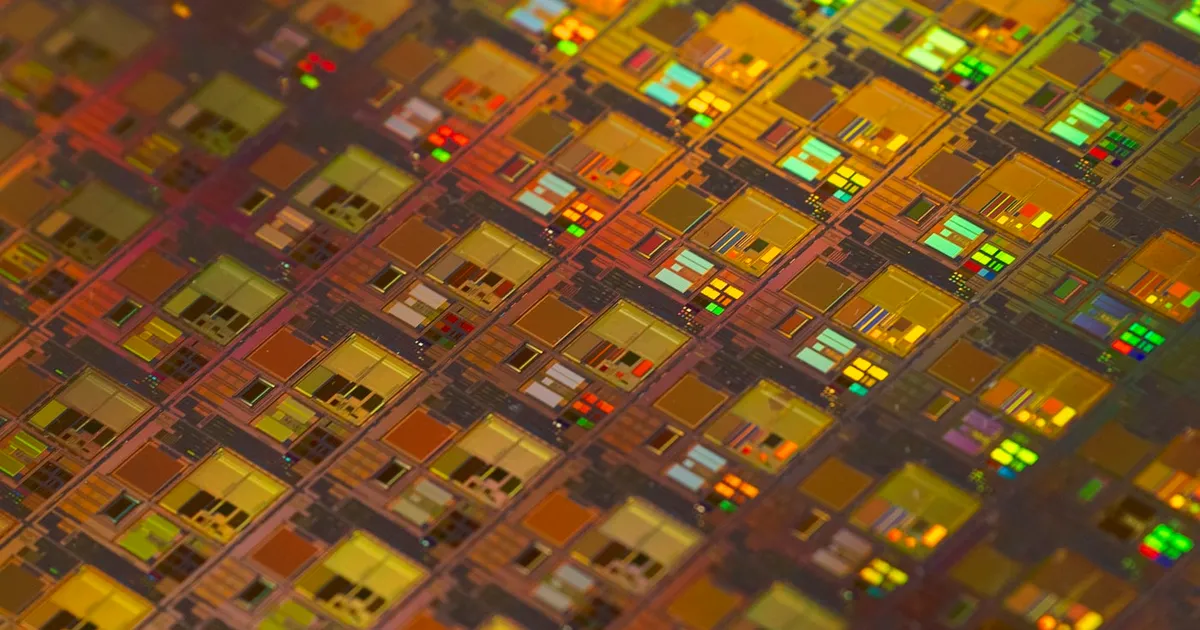
For a foundry business that has lost money for years, pricing power is a new and welcome problem. On August 19, 2026, multiple reports said Samsung Electronics has raised prices for some of its advanced contract chipmaking services by as much as 15% for new orders, as AI-fueled demand tightens capacity across an industry long dominated by TSMC. The increases, which sources say took effect for orders placed starting in July, mark a turnaround for a division that has been a loss maker since 2022 and had until recently been cutting prices to win work.
What Samsung raised
The hikes are concentrated in Samsung’s leading-edge nodes and are steepest for the customers with the fewest alternatives. According to the reporting, prices for chips made on Samsung’s 4-nanometer process (SF4) rose 10% to 15% for customers in China and the United States, while customers in Taiwan — home to rival TSMC — saw smaller increases of 5% to 10%. Wafers produced on the 5-nanometer SF5 process climbed 10% to 15%, and even Samsung’s older 8-nanometer technology rose by nearly 10%.
That Chinese customers are accepting the largest increases is telling. U.S. export curbs on advanced chipmaking equipment have made it harder for Chinese firms to build cutting-edge capacity domestically, pushing them toward overseas foundries for their most demanding designs. With TSMC’s leading-edge lines effectively booked out by AI orders, Samsung has become one of the few places left with available advanced capacity — and it is pricing accordingly.
The move follows the pattern set by the market leader. TSMC notified customers of 5% to 10% increases across its sub-5nm nodes starting in January, with some reports pointing to hikes approaching 25% on select services in 2027. Samsung, which had been discounting to claw back share, is now following the industry’s largest player upward rather than undercutting it.
A business turning the corner
The context for the increase is a foundry unit that has spent years in the red. By Counterpoint Research’s estimate, Samsung produced roughly 7% of global foundry revenue in the first quarter of 2026, against more than 70% for TSMC. The gap is enormous, and Samsung’s contract-manufacturing arm — the part of the company that builds chips designed by others, as opposed to its own memory — has been a persistent drag on group profitability since 2022.
Two things have changed. First, demand for AI accelerators and the advanced logic around them has outrun the industry’s ability to add capacity, so even a distant number-two foundry now finds its lines full. Second, Samsung has landed higher-profile custom silicon work, giving it reference customers that make its leading-edge nodes more credible to the next buyer. Filling 4nm and 5nm capacity at higher prices is exactly the combination the division has needed to stop bleeding cash.
Samsung’s memory business, by contrast, has been booming for over a year on the back of AI. The company posted one of the best quarters in its history in mid-2026, driven by AI-driven demand for high-bandwidth memory — though that blowout print also triggered a chip-stock selloff as investors decided perfection was already priced in. The foundry price hike is a smaller story financially than the memory windfall, but it matters strategically: it is the first clear sign that Samsung’s contract-chip arm can command pricing rather than concede it.
Why prices are rising across the board
The proximate driver is straightforward capacity scarcity. AI has pushed advanced-node demand past what the leading foundries can supply, and when the market leader’s lines are full, spillover demand flows to whoever else can run the process. That spillover gives Samsung leverage it has not had in years.
The increase also fits a broader inflation working its way through the semiconductor supply chain. The same AI boom that has vacuumed up foundry capacity has driven a parallel squeeze in memory, lifting DRAM and high-bandwidth memory prices through an extended memory supercycle and pushing costs downstream. That pressure has already reached consumer devices: Qualcomm confirmed it would raise Snapdragon prices by double digits starting September 1, citing surging memory and packaging costs. Foundry wafer prices are another input in the same equation. When the cost of the silicon itself rises alongside the cost of the memory that sits next to it, the pressure on device makers compounds.
For buyers of leading-edge logic — the fabless designers who build AI accelerators, mobile processors, and networking chips — the practical consequence is that there is no cheap alternative to TSMC anymore. For much of the past decade, Samsung’s foundry was the value option, a way to second-source capacity or negotiate TSMC down. As Samsung raises prices toward the leader, that pressure valve narrows. The entire advanced-node market is repricing upward at once.
The competitive picture
Samsung’s ability to raise prices does not erase the structural gap with TSMC, whose scale, yield, and packaging ecosystem remain far ahead. TSMC’s advanced packaging capacity in particular — the CoWoS-style technology that stitches logic dies to stacks of high-bandwidth memory — is the real bottleneck for AI accelerators, and it is a race Samsung is still working to close. Winning wafer orders is one thing; matching TSMC’s back-end capacity is another.
Still, the price action changes the strategic math. A foundry that can charge more for scarce capacity has room to reinvest in the equipment and process work needed to narrow the gap, rather than burning cash to hold share. It also gives Samsung’s customers a reason to lock in capacity commitments earlier, which further tightens the market. And it validates a thesis the whole sector has been trading on all year: that AI demand has shifted pricing power decisively toward anyone who controls scarce advanced-manufacturing capacity, whether in logic or memory.
The risk, as always in semiconductors, is timing. Capacity that is scarce today can become abundant when the current wave of fab expansion comes online, and a foundry that raised prices into a shortage can find itself cutting them into a glut. The violent swings in chip equities this year reflect exactly that uncertainty — a market that cannot decide whether it is early or late in the cycle. Samsung’s hike is a bet that the tightness lasts long enough to matter.
What it means
For Samsung, the price increase is the clearest signal yet that its long-suffering foundry business is turning. Charging more for full 4nm and 5nm lines improves the economics of a division that has lost money since 2022, and it gives management a self-funding path to invest in closing the gap with TSMC rather than subsidizing market share. Whether it holds depends on demand staying ahead of the capacity coming online across the industry.
For chip buyers, the message is that the cheap alternative is disappearing. As Samsung raises prices toward TSMC’s, fabless designers lose the leverage that a discounted second source used to provide. Combined with the memory squeeze already flowing into devices, the cost of building leading-edge silicon is rising from multiple directions at once, and there is no obvious relief valve while AI demand keeps advanced capacity full.
For the industry, the hike is another data point in a repricing that started in the data center and is now spreading through the entire supply chain. TSMC raised prices, Samsung is following, memory makers are riding a supercycle, and device vendors like Qualcomm are passing costs to consumers. The through-line is scarce capacity and pricing power concentrating with whoever controls it. Watch the next round of foundry-utilization data and TSMC’s 2027 pricing guidance to gauge whether this tightness is a durable shift or the top of a cycle — and watch how quickly the world’s expanding roster of new fabs starts to loosen it.
Tagged
Keep reading
 Kurumi · · 12 min read
 Samsung Q2 2026 Earnings: Record Profit on AI Memory
Samsung posted a record 89.4 trillion won Q2 operating profit, up 19-fold, as AI memory and HBM demand made it tech's most profitable quarter.
Kurumi · · 6 min read Korea Chip Exports Hit Record in August, Up 209%
South Korea's chip exports jumped 209% in August 2026 to a record $46.65B — nearly half of all exports — as hyperscaler AI spending drove demand.
 Kurumi · · 5 min read
 Marvell Q2 Earnings: Record $2.74B, Raised Guidance
Marvell posted record Q2 FY2027 revenue of $2.74B on a 46% data center surge, raised its outlook again, and guided Q3 to $3.15B. The numbers and what they mean.