Nvidia Eyes Rebellions: AI Chip Deal, What to Know
Nvidia is in early talks with South Korean AI chip startup Rebellions on a partnership, investment, or acquisition. What Rebellions builds and why it matters.
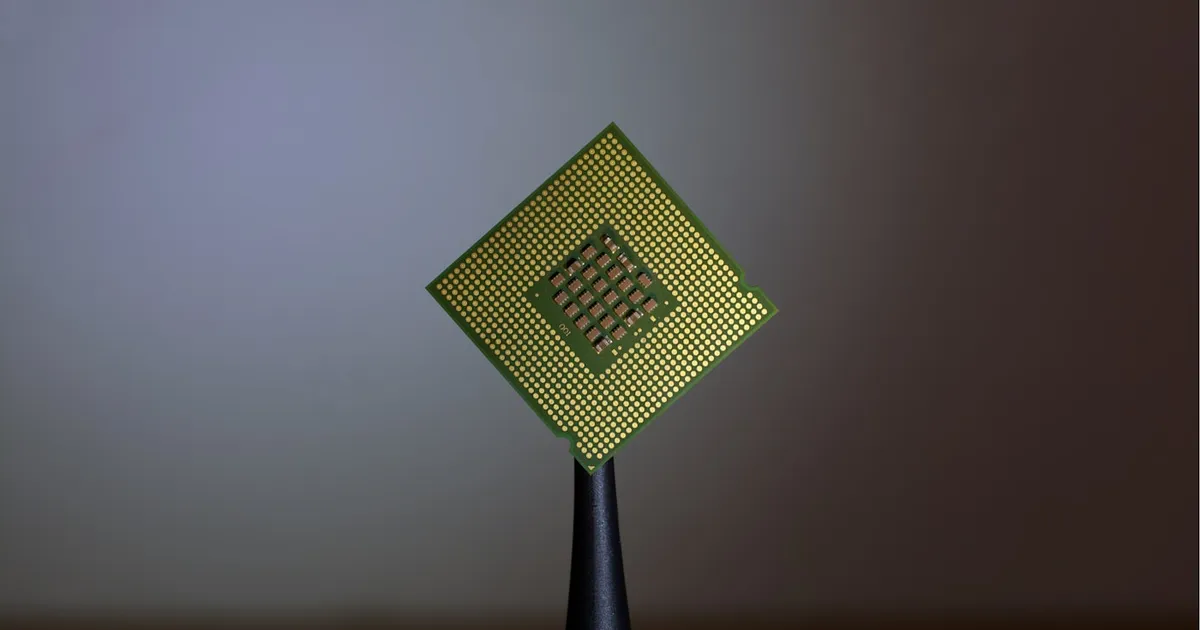
Nvidia is the most valuable chip company in the world, and it rarely shops for silicon it cannot already build. So the report that it is talking to a young South Korean rival caught attention. On August 21, 2026, Bloomberg reported that Nvidia is in early-stage talks with Rebellions, a Seoul-based AI chip startup, about a potential deal that could range from a technical partnership to an equity investment or even a full acquisition. Nvidia CEO Jensen Huang met with Rebellions co-founder and CEO Sunghyun Park at Nvidia’s Santa Clara headquarters this week, according to people familiar with the discussions.
The talks are preliminary and may not lead to any agreement, the reports cautioned. But the mere fact of them is a signal about where the AI chip market is heading: toward inference, toward custom silicon, and toward consolidation of the specialist design talent that builds it.
Who Rebellions is
Founded in 2020, Rebellions is a fabless chip company — it designs processors but outsources manufacturing to a foundry — specializing in neural processing units (NPUs) aimed at data centers. If you want the fuller primer, we have an explainer on what an NPU is and how it differs from a general-purpose GPU. In short, an NPU is a processor built specifically to run neural-network math efficiently, and Rebellions has targeted the fast-growing market for AI inference — executing already-trained models against real-world data at scale, as opposed to the training runs that first produce them.
That focus is the strategic core of the story. Training has been Nvidia’s fortress, the workload its most advanced GPUs dominate. But as AI systems move from the lab into production, the volume of inference — every chatbot reply, every agent step, every image generated — is exploding, and it runs on different economics. Purpose-built inference chips can offer better performance per watt and lower cost per query than repurposed training GPUs, and a wave of startups has raced to fill that niche.
Rebellions has raised roughly $850 million to date from investors including SK Hynix and Samsung Venture Investment, and carries a recent valuation of about $2.3 billion. Its backing from South Korea’s two memory giants is not incidental: the country has become a linchpin of the AI hardware supply chain, a theme we have followed through Nvidia’s $500 billion HBM and AI-factory tie-up with SK Group and the Samsung and SK Hynix chip rally that has lifted the Kospi this year.
Why Nvidia would want it
For Nvidia, an approach to Rebellions fits a pattern of full-stack expansion. The company has spent the past two years extending beyond merchant GPUs into networking, software, systems, and strategic investments across the AI stack. Adding a dedicated inference-chip design team — one with data-center NPUs already in the market and Korean memory partners on the cap table — would deepen Nvidia’s presence in the workload where its competitive moat is thinnest.
There is also a defensive logic. The specialist NPU startups are precisely the companies building the alternatives that hyperscalers and AI labs increasingly want, whether to cut costs or to reduce dependence on a single supplier. That is the same impulse driving custom-silicon programs elsewhere — the reason AMD’s MI400 line is pitched squarely against Nvidia, and the reason labs are commissioning their own application-specific chips. Bringing a promising inference-chip designer inside the tent removes a competitor and adds capability at once.
The engagement at the CEO level — Huang meeting Park in person — suggests Nvidia is treating this as more than a routine partnership scouting exercise. The range of options reportedly on the table, from licensing Rebellions’ technology to an outright purchase, indicates the two sides are still defining what a deal would even be.
Rebellions had other plans
The complication is that Rebellions was already on a different path. The company’s CFO, Sungkyue Shin, has said Rebellions is actively preparing for an IPO, with a listing on South Korea’s main stock exchange as its top priority. In March 2026, Bloomberg reported that Rebellions had appointed JPMorgan Chase as global lead underwriter, targeting a public offering in late 2026 or early 2027.
An acquisition and an IPO are mutually exclusive outcomes, so Rebellions faces a genuine fork: sell into Nvidia’s ecosystem now, or stay independent and test public investors’ appetite for a homegrown Korean AI-chip champion. Each path carries a different risk profile — the certainty and resources of joining Nvidia against the upside and autonomy of going public into a red-hot chip market.
The regulatory overhang
Any acquisition would not be simple to close. A deal for Rebellions could face U.S. antitrust review — Nvidia’s market power is already under global scrutiny — as well as South Korean regulatory examination, given the company’s strategic importance and its ties to national champions SK Hynix and Samsung. Seoul has grown protective of its semiconductor crown jewels, and the prospect of the world’s dominant AI chipmaker absorbing a domestic NPU designer would draw political as well as competitive attention.
That regulatory friction is one reason a lighter-touch outcome — a technical partnership or a minority investment — may prove more achievable than a full takeover, at least in the near term.
What it means
The Nvidia–Rebellions talks are early, and may amount to nothing. But they crystallize three shifts worth tracking regardless of the outcome.
Inference is the new battleground. Nvidia’s willingness to engage a specialist NPU startup is an acknowledgment that the next phase of AI compute is defined by running models, not just training them — and that the economics there favor purpose-built silicon. Whoever controls efficient inference controls the cost curve of deployed AI.
Who wins if a deal happens: Nvidia, which would neutralize a rising competitor and bolster its weakest flank; Rebellions’ investors — including SK Hynix and Samsung — who would secure a lucrative exit; and Nvidia’s largest customers, if the acquired technology yields cheaper inference. Who loses: the broader field of independent inference-chip challengers, for whom consolidation under the market leader narrows the competitive space, and potentially South Korea’s ambition to grow an independent chip champion, if a national contender is absorbed rather than floated.
What to watch next: whether the talks firm up into a defined structure or fade, which they easily could at this stage; whether Rebellions proceeds with its IPO regardless; and how U.S. and Korean regulators signal on a hypothetical acquisition. Nvidia buying inference talent would be a meaningful tell that the company sees its GPU dominance as necessary but no longer sufficient for the AI era’s next chapter.
Keep reading
 Chisato · · 4 min read
 Nvidia–SK Group $500B Deal: HBM Supply, AI Factory
Nvidia and SK Group unveiled a $500B+ AI partnership locking in SK Hynix HBM4 supply and a 2GW AI factory in Korea. Here are the details and what to watch.
 Chisato · · 7 min read
 Nvidia Vera CPU Specs: Olympus Cores, SPEC Benchmarks
Nvidia detailed its Vera CPU — 88 custom Olympus cores, 1.2 TB/s memory, and SPEC CPU 2026 scores that edge AMD's Epyc dual-socket flagship.
 Chisato · · 5 min read
 Nvidia Australia AI Factories: 2 GW Buildout by 2027
Nvidia lined up eight Australian data center operators to build up to 2 GW of AI factory capacity by 2027, roughly doubling the nation's compute footprint.