Japan Adds $944M for Rapidus in 2nm Chip Race
Japan's METI is seeking ¥150 billion ($944M) more for chipmaker Rapidus in its FY2027 budget, backing a long-shot bid for 2nm mass production by 2027.
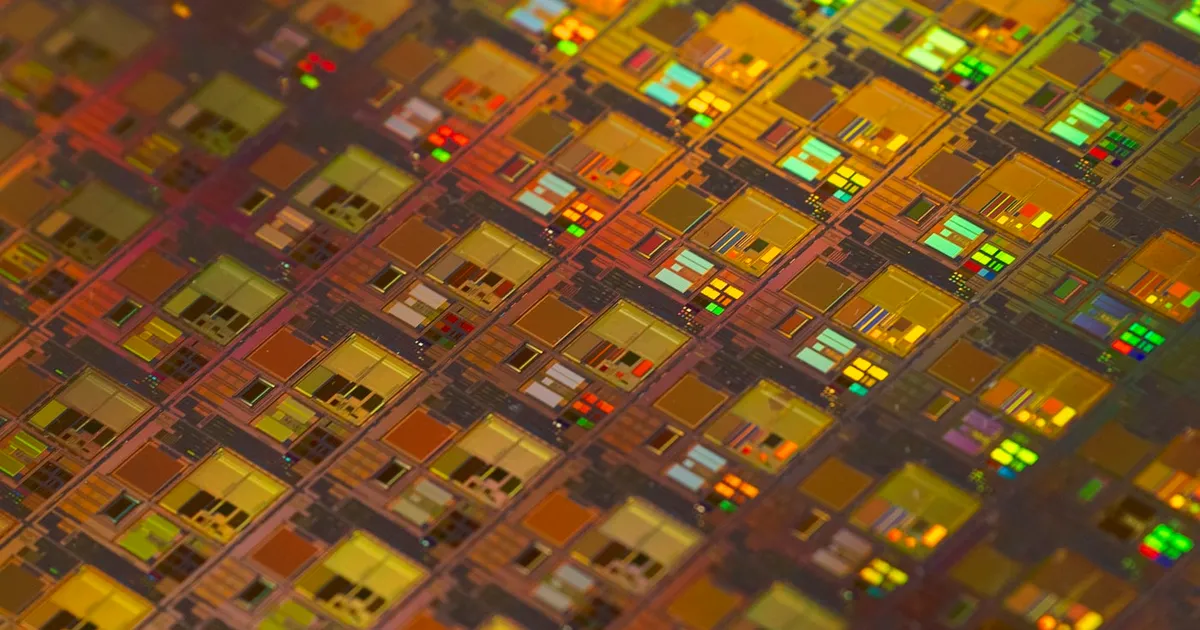
Japan is doubling down on its most expensive industrial bet. On August 21, 2026, Bloomberg and Nikkei Asia reported that the country’s Ministry of Economy, Trade and Industry (METI) is seeking an additional ¥150 billion — roughly $944 million — for chip startup Rapidus Corp. in its fiscal 2027 budget request. The money would extend a state-backed campaign that has already committed billions to a single goal: standing up domestic manufacturing of cutting-edge 2-nanometer logic chips and loosening Japan’s dependence on Taiwan’s TSMC.
The request lands at a delicate moment for Rapidus, a company founded only in 2022 that is attempting in a few short years what took the industry’s leaders decades. The new tranche is less a routine top-up than a signal: Tokyo intends to keep writing checks, and it is increasingly willing to take direct ownership rather than hand out subsidies with no strings attached.
The funding and how it is structured
The ¥150 billion earmarked in the FY2027 budget request is the latest installment in a funding effort that has steadily escalated in both size and form. Earlier in 2026, Rapidus secured a separate ¥150 billion as Japan shifted its support model from grants toward direct equity investment — the government taking a stake in the company rather than simply defraying its costs. That shift matters: it converts public money into ownership, aligning the state’s balance sheet with Rapidus’s success or failure and giving Tokyo a seat at the table rather than a receipt.
Cumulatively, Japan has now directed billions of dollars toward the venture, with reporting through 2026 putting total committed public support in the multi-billion-dollar range. Private industry has participated too — Rapidus has raised capital from a consortium of Japan’s largest industrial companies — but the state remains the indispensable backer. Without continued government funding, the economics of building a leading-edge fab simply do not close.
METI’s rationale, as described in the reporting, extends well beyond commercial return. Policymakers frame Rapidus’s technological independence as critical to national security, tying advanced-chip capability to Japan’s ambitions in AI, robotics, and quantum computing. In that framing, the ¥150 billion is not venture capital chasing a return; it is strategic infrastructure spending, closer in spirit to funding a port or a power grid than backing a startup.
The 2nm mission and why it is so hard
Rapidus’s stated target is mass production of 2-nanometer logic semiconductors by 2027 at its fabrication plant in Hokkaido. Two nanometers refers to the leading edge of chipmaking — the process node used for the most advanced processors powering AI accelerators, flagship smartphones, and high-performance computing. Today, that frontier is dominated by TSMC, with Samsung and Intel the only other companies seriously contesting it.
Breaking into that club is extraordinarily difficult. Leading-edge fabrication requires mastery of extreme ultraviolet (EUV) lithography, sub-nanometer process control, and yields high enough to make the economics viable — capabilities that TSMC refined over more than a decade and hundreds of billions of dollars in capital expenditure. Rapidus is trying to compress that curve, betting on a partnership with IBM for process technology and Belgian research hub imec for advanced lithography know-how.
The competitive backdrop is unforgiving. TSMC’s July revenue surged 44.7% year over year as AI demand strained its capacity, and the foundry giant raised its 2026 capital-spending forecast to between $60 billion and $64 billion — more than Rapidus’s entire funding base, spent in a single year. Samsung, meanwhile, has been raising foundry prices on the back of AI demand, and Intel is pushing its own leading-edge roadmap with the first high-volume high-NA EUV logic. Against incumbents operating at that scale, a 2027 debut for a company founded in 2022 is, by any measure, a long shot — a characterization even the reporting adopts.
Industrial policy as the new normal
Rapidus is one node in a global race to on-shore chip production that has turned governments into direct participants in the semiconductor market. The United States has poured CHIPS Act money into domestic fabs; South Korea signed a $950 billion chip supply pact with Washington; and Japan itself has moved to treat frontier compute as sovereign infrastructure, most visibly through the Noetra national AI factory built on Nvidia hardware.
What distinguishes the Rapidus effort is the combination of ambition and starting point. Most industrial-policy chip bets subsidize the expansion of existing, proven manufacturers — a TSMC fab in Arizona, a Samsung line in Texas. Japan is instead trying to build a leading-edge foundry from scratch, a far riskier proposition that no country has pulled off in the modern era. The ¥150 billion request is Tokyo’s acknowledgment that such a bet cannot be made once; it has to be funded, and re-funded, through the years-long gap between spending and any commercial output.
That gap is precisely the political vulnerability. Rapidus will consume public money for years before it ships a single revenue-generating wafer at scale, and its 2027 timeline leaves little margin. Budget requests like this one keep the venture alive, but each installment also raises the sunk-cost stakes — and the eventual reckoning if the 2nm target slips or the yields disappoint.
The commercial test still ahead
Funding buys time and equipment; it does not buy customers. The harder problem for Rapidus is commercial: even if the Hokkaido line achieves competitive yields on schedule, the company still has to persuade fabless chip designers to entrust their most advanced products to an unproven first-generation process. Leading-edge silicon is a trust business. Designers commit years of roadmap and tens of millions in mask sets to a foundry, and switching costs are enormous — which is exactly why incumbents like TSMC enjoy such durable loyalty.
Rapidus has signaled that it will court customers who value supply-chain diversification and geographic security over raw scale — companies wary of concentrating their entire advanced-node supply in Taiwan. That pitch has strategic appeal in an era of geopolitical risk, and it dovetails with the same sovereign-compute logic driving Japan’s broader chip policy. But appeal is not orders. Until Rapidus can point to marquee design wins and demonstrate that its yields hold up in volume, the ¥150 billion remains an input without a proven output. The company has said it aims to run pilot production first, using early results to build the credibility that paying customers will demand before they commit — a sequencing that makes the next 18 months the real proving ground.
What it means
The ¥150 billion request confirms that Japan is fully committed to Rapidus, and that its support has evolved from arms-length subsidy into direct ownership and sustained capital. Tokyo is not hedging; it is compounding its bet.
Who wins if it works: Japan’s broader technology base. A domestic source of 2nm logic would give the country’s AI and robotics ambitions a supply chain it controls, insulating strategic industries from the geopolitical risk concentrated in Taiwan. Rapidus’s industrial backers and Hokkaido’s regional economy stand to benefit as well.
Who bears the risk: Japanese taxpayers, who are now equity holders in one of the most technically demanding ventures in the industry. If Rapidus hits its 2027 milestone with competitive yields, the direct-investment model looks prescient. If it misses — the base-rate outcome for a from-scratch leading-edge entrant — the state absorbs the loss directly, not as a written-off grant but as an impaired stake.
What to watch next. The first signal is execution against the 2027 mass-production target: pilot-line yields, customer commitments, and whether Rapidus can attract fabless designers willing to trust a first-generation process. The second is the budget itself — whether the ¥150 billion survives Japan’s FY2027 appropriations intact, and whether future installments keep pace with the capital intensity that competitors like TSMC demonstrate every quarter. And the third is strategic: whether Japan’s from-scratch approach becomes a model other nations copy, or a cautionary tale about the limits of buying your way onto the semiconductor frontier.
Tagged
Keep reading
 Kurumi · · 6 min read
 Korea Chip Exports Hit Record in August, Up 209%
South Korea's chip exports jumped 209% in August 2026 to a record $46.65B — nearly half of all exports — as hyperscaler AI spending drove demand.
 Kurumi · · 5 min read
 Marvell Q2 Earnings: Record $2.74B, Raised Guidance
Marvell posted record Q2 FY2027 revenue of $2.74B on a 46% data center surge, raised its outlook again, and guided Q3 to $3.15B. The numbers and what they mean.
 Kurumi · · 5 min read
 Nvidia AI Server Prices to Rise 15%+ on Memory Costs
Nvidia's server builders have told Microsoft, Google and Oracle that Vera Rubin and Grace Blackwell system prices will climb more than 15% from early 2027 as memory costs soar.