Adobe's New CEO: Anil Chakravarthy Replaces Narayen
Adobe named Anil Chakravarthy its next CEO, replacing Shantanu Narayen on Dec. 1 amid investor fears that AI is disrupting its creative software.
Adobe named Anil Chakravarthy as its next president and chief executive on Wednesday, September 3, 2026, ending one of the longest and most consequential CEO tenures in enterprise software. Chakravarthy will take the helm on December 1, 2026, succeeding Shantanu Narayen, who has led the company for more than 18 years and will move to the role of executive chair. Chakravarthy will also join Adobe’s board.
The transition itself was not a surprise — Narayen signaled in March 2026 that he intended to step down. What unsettled Wall Street was the combination of who got the job and who walked out the door in the same week. David Wadhwani, the president of Adobe’s Digital Media business and the executive widely regarded as the heir apparent, announced his own departure rather than the promotion many expected. Adobe shares fell as much as 7% on September 4, the session after the announcement, extending a slide that has defined the stock for three straight years.
The succession
Chakravarthy most recently served as president of Adobe’s customer experience orchestration and worldwide field operations — the enterprise-facing side of the company that sells its Experience Cloud marketing and analytics software and runs its global sales organization. He joined Adobe roughly seven years ago, in 2020, as an executive vice president, arriving from the CEO seat at Informatica, the enterprise data-management company he ran before and after its time as a public company. He grew up in Bengaluru and trained as an engineer before a career spent largely in enterprise software.
That background is the story. Narayen becomes executive chair, a role that keeps him close to strategy and the board while handing day-to-day control to Chakravarthy. The two-month runway to the December 1 handoff is designed to look orderly. But the choice of an enterprise and data leader over a creative-products leader is a statement about where Adobe’s board believes the company’s future growth — and its risk — now sits.
Narayen’s record
Narayen leaves behind one of the most cited turnarounds in the industry. When he became CEO in 2007, Adobe was a boxed-software company selling perpetual licenses for Photoshop, Illustrator, and Acrobat. Under him, Adobe made the wrenching bet to kill that model and move customers onto Creative Cloud subscriptions — a transition largely completed by 2013 that traded lumpy, one-time license sales for predictable recurring revenue. It became a template that much of the software industry later copied.
The financial arc is stark: Adobe’s annual revenue grew from roughly $3 billion at the start of Narayen’s tenure to more than $25 billion today. For most of that period the stock compounded accordingly, and Adobe was treated as a durable, high-margin franchise with a moat around professional creative work. Narayen’s departure closes that chapter on a company that is, by the numbers, vastly larger and more profitable than the one he inherited — and, by its share price, one the market no longer prices as untouchable.
Why Chakravarthy, not Wadhwani
The name that hangs over the appointment is the one that isn’t on it. David Wadhwani ran the Digital Media business — the division that houses Creative Cloud and Document Cloud, Adobe’s flagship and largest revenue engine. He had led the original Creative Cloud transition before leaving to serve as CEO of AppDynamics, then returned to Adobe in 2020. To much of Wall Street he was the obvious successor: a product-centric leader who understood the creative franchise from the inside and could preserve continuity.
His exit, announced the same week as Chakravarthy’s promotion after nearly five years back at Adobe, reframes the decision. A board that wanted continuity in the creative business had a candidate purpose-built for it. Instead it chose the executive who built out Adobe’s enterprise and field operations and who ran a data-management company before that — and the heir apparent left rather than stay. Analysts read the move as Adobe importing an “Informatica playbook”: a wager that Adobe’s next act is agentic, enterprise, and data-driven, applied at the scale of Photoshop’s user base rather than to a mid-cap software company. It also fits a broader pattern of enterprise-software vendors reorganizing around AI, from Salesforce’s Claude-powered enterprise push outward.
The AI question hanging over Adobe
Chakravarthy inherits a company whose core premise is under direct pressure from generative AI. Adobe’s franchise rests on being the indispensable toolset for producing professional-looking content. Generative models increasingly let anyone produce credible images, video, and design with a prompt — collapsing the very skill gap that made Photoshop and its siblings essential. The market has been pricing that threat for a while.
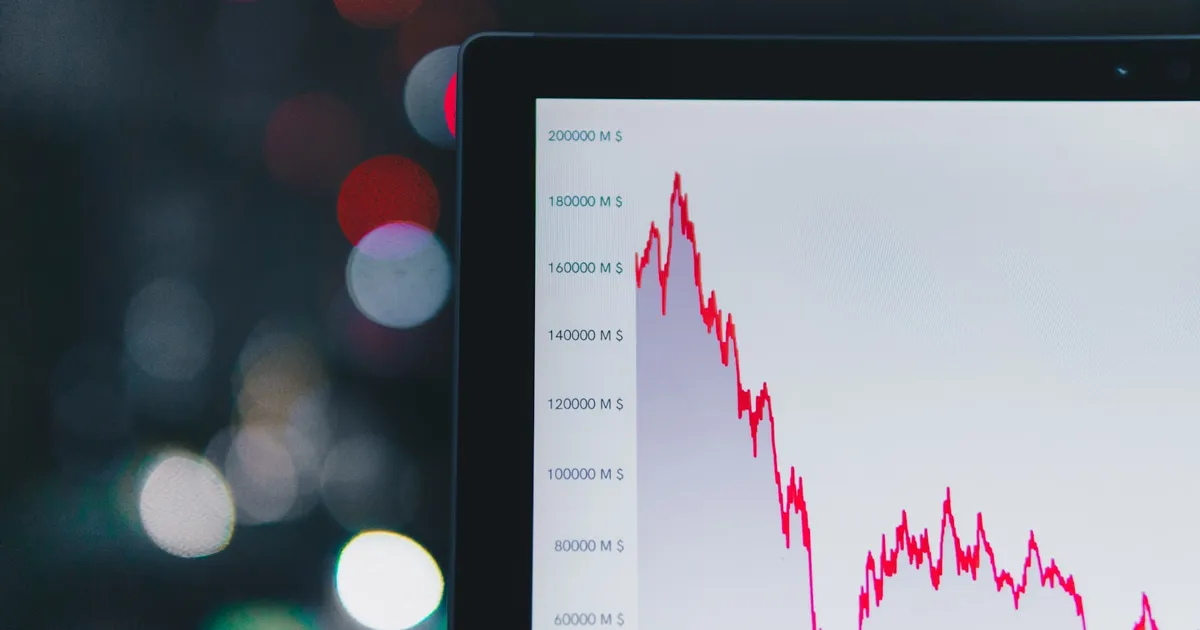
The stock tells the story. After a boom in 2023, Adobe shares fell about 25% in 2024, another 21% in 2025, and are down roughly 18% in 2026 — a three-year drawdown that stands out against an S&P 500 near records, and part of the wider rotation out of software and into AI hardware that has punished incumbents seen as disruption targets. Adobe’s answer has been Firefly, its family of generative models, woven into Photoshop and the broader creative suite. The question Wall Street keeps asking is whether Firefly lets Adobe capture new revenue from the AI shift, or merely keeps existing subscribers from leaving — a defensive tax rather than a growth engine.
That question does not get a long grace period. Adobe reports fiscal third-quarter results on Thursday, September 10, one of the marquee software prints in a data-heavy, holiday-shortened week that also features Oracle’s earnings and Apple’s iPhone event. Investors will be listening less for the quarter’s numbers than for what an incoming CEO — one who does not formally start until December — signals about strategy, and whether Firefly’s monetization is finally showing up in the guidance.
What it means
Adobe’s leadership change reads as a referendum on how a software incumbent survives the AI era — and the board’s answer is to bet on enterprise and data over creative-product continuity.
Who wins. Chakravarthy inherits a company with $25 billion in revenue, deep enterprise relationships, and a still-dominant position in professional creative and document workflows — real assets from which to run an AI-and-enterprise playbook. If Firefly and Adobe’s Experience Cloud can be knit into an agentic, data-driven offering for large customers, the choice of an enterprise operator over a product loyalist will look prescient.
Who is exposed. The near-term risk is talent and continuity. Losing Wadhwani, the leader most identified with the creative franchise, at the moment that franchise is under the most pressure removes institutional knowledge exactly where Adobe can least afford gaps. A 7% single-day drop and a three-year stock decline signal that investors are not yet convinced the strategic pivot offsets the disruption threat — and a leadership transition adds execution risk on top of it.
What to watch next. Three markers over the coming months: the September 10 earnings print and any Firefly monetization detail that shows AI turning into incremental revenue rather than churn prevention; whether more senior creative-side leaders follow Wadhwani out before the December 1 handoff; and how explicitly Chakravarthy reorients Adobe toward agentic, enterprise, and data products once he formally takes over. Narayen pulled off the last great pivot in Adobe’s history, from boxed software to the cloud. His successor is being asked to pull off the next one — this time against a technology that threatens the product itself, not just the way it is sold.
Keep reading

 Kurumi · · 6 min read
 Fluidstack Hits $18B Valuation on AI Data Center Boom
Fluidstack, an Oxford-founded neocloud backed by Google, has reached a roughly $18 billion valuation on the back of a ~$50B Anthropic deal and Google TPU hosting.
 Kurumi · · 4 min read
 Mistral €3B Series D: Samsung, Valuation, What to Watch
Mistral raised €3 billion led by Samsung at a €21B+ valuation — Europe's largest tech round. Here are the investors, the numbers, and the strategy behind it.
 Kurumi · · 5 min read
 Anthropic IPO: Investors Want Revenue-Per-Token Data
Ahead of Anthropic's IPO, would-be investors are demanding granular metrics like revenue per token and per gigawatt of compute. Here's what the numbers show.