What Is the Bid-Ask Spread?
The bid-ask spread is the gap between the highest price buyers will pay and the lowest price sellers will accept. What sets its width and why it matters.
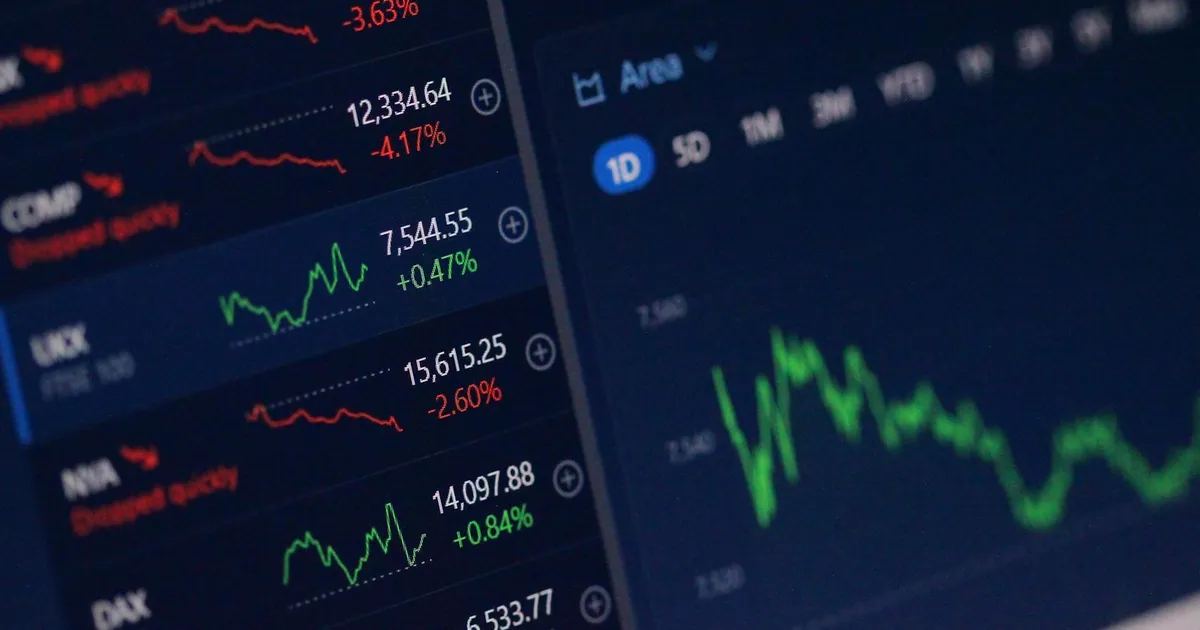
The bid-ask spread is the difference between the highest price a buyer is currently willing to pay for a security (the bid) and the lowest price a seller is currently willing to accept (the ask, or offer). It’s the built-in cost of trading immediately rather than waiting for a better price, and its width tells you a lot about how easy an asset is to trade without moving the price against yourself.
Reading a quote
A stock quote showing “bid $50.10 / ask $50.15” means the highest standing buy order is at $50.10 and the lowest standing sell order is at $50.15. The spread is $0.05. If you place a market order to buy right now, you pay the ask ($50.15); if you sell right now, you receive the bid ($50.10). That five-cent gap is money that changes hands to whoever was already standing ready to trade — it’s not a fee charged by an exchange, it’s the compensation earned by the party providing liquidity on the other side.
Who sets the spread
Market makers are the parties that continuously quote both a bid and an ask, standing ready to buy or sell at those prices. See what a market maker is for how that role works in practice. A market maker profits from the spread itself — buying at the bid and selling at the ask over and over — in exchange for taking on the risk of holding inventory and being obligated to trade even when the market is moving against them. The spread is effectively their compensation for providing that continuous willingness to trade, and for the risk that the price moves before they can offload a position.
What makes a spread wide or narrow
- Liquidity. Heavily traded securities — large-cap stocks, major index ETFs — attract many competing market makers and a constant stream of orders on both sides, which compresses the spread to a fraction of a percent. Thinly traded stocks, small-cap names, or illiquid bonds have far fewer participants willing to quote, so the spread widens to compensate for the extra risk and difficulty of finding a counterparty.
- Volatility. When prices are moving quickly, market makers widen their quotes to protect against the risk of being picked off — filling an order at a stale price just before the market moves further. Spreads on the same security routinely widen during periods of high volatility and narrow again once things calm down.
- Trading volume and time of day. Spreads tend to be tightest during the most active trading hours, when order flow on both sides is highest, and widen at the open, the close, or overnight when fewer participants are quoting.
Why the spread matters to a trader
The spread is a real, immediate cost, separate from any commission. Buy at the ask and sell at the bid a moment later — even with the price technically unchanged — and you’ve paid the full spread as a round-trip cost. For a security with a wide spread, that cost can dwarf any brokerage commission, which is why frequent traders and anyone dealing with illiquid securities pay close attention to it, not just to the last-traded price.
This is also the practical argument for using limit orders instead of market orders in a wide-spread security: a limit order lets you name your price rather than accepting whatever the market maker is currently quoting, at the cost of not being guaranteed an immediate fill.
Spread as a liquidity signal
Because the spread compresses when many participants are actively trading and widens when they’re not, it functions as a quick, observable proxy for liquidity — how easily an asset can be bought or sold without materially moving its price. A one-cent spread on a widely held ETF signals deep, continuous two-sided interest. A spread that’s several percent of the asset’s price signals the opposite: few participants, real difficulty exiting a position quickly, and a real cost to trading in and out.
This is one reason arbitrage opportunities that look attractive on paper often aren’t — a price discrepancy between two venues has to be larger than the combined spread (and any transaction costs) on both sides before it’s actually profitable to capture.
The takeaway
The bid-ask spread is the gap between what buyers are willing to pay and what sellers are willing to accept right now, and it’s the cost of trading immediately rather than waiting. Narrow spreads signal deep liquidity and active two-sided interest; wide spreads signal the opposite and translate directly into a higher round-trip cost for anyone trading that security. It’s a cost every trader pays whether they notice it or not — the difference is whether they’re accounting for it.
Tagged
Keep reading
 Kurumi · · 5 min read
 What Is a Dual-Class Share Structure?
A dual-class share structure gives some shares more votes than others, so founders keep control with a minority stake. How it works and the trade-offs.
 Kurumi · · 5 min read
 What Is Deferred Revenue? Unearned Revenue, Explained
Deferred revenue is cash a company has received for goods or services it has not yet delivered. How it is recorded, recognized, and read by investors.
 Kurumi · · 5 min read
 What Is Operating Leverage? Fixed Costs and Profit Swings
Operating leverage measures how much a company's operating profit changes when revenue changes, driven by its fixed costs. How it works and why it matters.