What Is Inflation? How CPI Measures Rising Prices
Inflation is the rate at which prices rise and purchasing power falls over time, typically measured by the Consumer Price Index. How CPI is calculated.
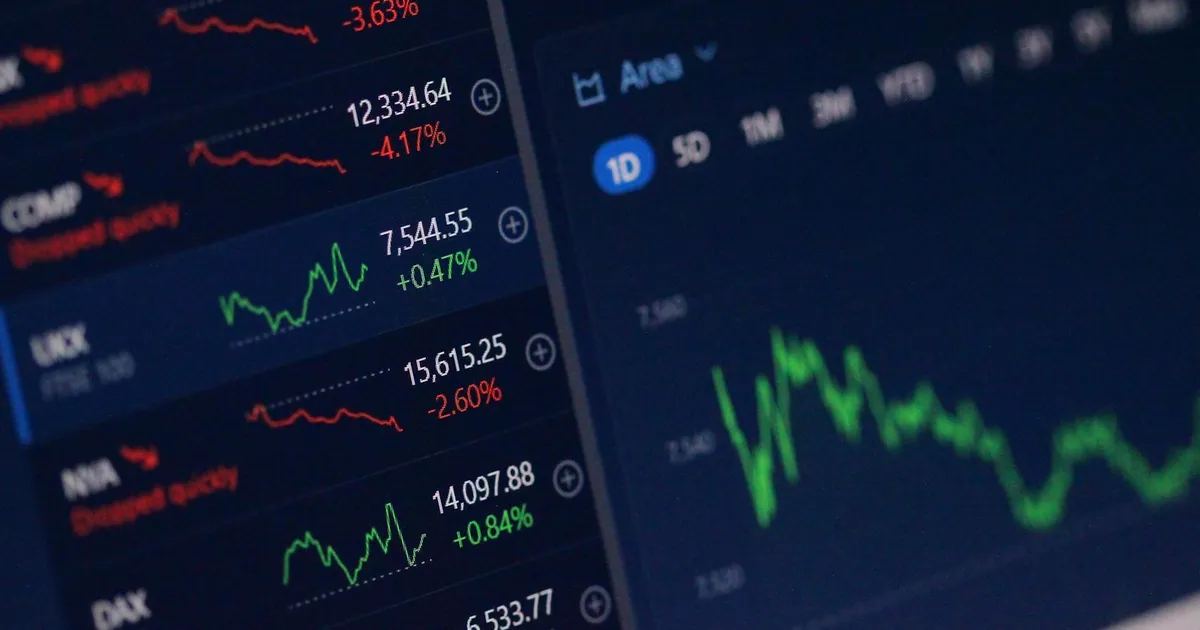
Inflation is the rate at which the general price level for goods and services rises over time, which means each unit of currency buys a little less than it did before. It’s usually expressed as a percentage change over a year — “inflation was 3%” means the average basket of goods that cost $100 a year ago now costs about $103. The most widely cited measure of it in the United States is the Consumer Price Index, or CPI.
Why prices rising isn’t automatically a problem
A single price going up — coffee, rent, a specific stock — isn’t inflation on its own; that’s just supply and demand for one thing. Inflation refers to a broad, sustained rise across the whole economy, which is why it’s measured as an average across a large basket of goods and services rather than tracked for any one item.
Some inflation is considered a normal, even healthy, feature of a growing economy — it reflects rising wages, rising demand, and the general trajectory of an economy that’s producing and spending more over time. Central banks, like the U.S. Federal Reserve, typically target a specific low, stable inflation rate rather than zero, on the reasoning that a small, predictable amount of inflation gives more room to cut interest rates during a downturn than a deflationary environment would. Deflation — falling prices — sounds appealing on its face but tends to be worse in practice: it encourages people to delay purchases waiting for lower prices, which slows spending and can spiral into weaker economic activity.
How CPI is actually calculated
The Consumer Price Index tracks the price of a fixed “basket” of goods and services meant to represent what a typical household buys — housing, food, transportation, medical care, apparel, recreation, and more — and compares that basket’s total cost over time.
The process, in broad strokes:
- Build the basket. Statistical agencies survey households to determine what a representative consumer actually spends money on, and in what proportion. Housing typically makes up the largest single share.
- Weight the categories. Each category in the basket is weighted by how much of a typical budget it represents — a small change in gasoline prices moves the index less than an equivalent percentage change in housing costs, because housing carries more weight.
- Price the basket regularly. Prices for the same (or equivalent) items are collected on a regular cadence across many locations and retailers.
- Compare over time. The current basket’s total cost is compared to a prior period — commonly month-over-month or year-over-year — to produce the headline inflation percentage.
CPI is a relative measure, not an absolute one: it doesn’t tell you what things cost, it tells you how much that cost has changed relative to a baseline period.
Headline CPI vs core CPI
You’ll often see inflation reported two ways: headline CPI, which includes everything in the basket, and core CPI, which excludes food and energy prices. Food and energy are volatile — a weather event or a geopolitical disruption can swing them sharply in a way that says little about the broader economy’s underlying price trend. Core CPI strips that volatility out to give a steadier read on where prices are actually trending, which is why economists and central bankers often weight core CPI more heavily than the headline number when making policy decisions, even though headline CPI is what actually shows up on a household’s bills.
How inflation actually erodes purchasing power
The practical effect of inflation is that money sitting still loses value. $10,000 in cash earning nothing, sitting through a year of 3% inflation, has the purchasing power of about $9,700 in today’s terms by the end of that year — it hasn’t lost any dollars, but it buys less. This is the core argument for holding assets that are expected to outpace inflation over time rather than large amounts of idle cash, and it’s the same reasoning behind the rule of 72, which estimates how long it takes an amount to double at a given rate — inflation is effectively that same math running in reverse against a saver’s purchasing power.
It’s also why understanding compound interest matters alongside inflation, not separately from it: a savings account or bond needs to compound faster than the inflation rate just to preserve value, before it can be said to be growing wealth in real terms.
Inflation’s relationship to interest rates and bonds
Central banks primarily respond to high inflation by raising interest rates, making borrowing more expensive and saving more attractive, which tends to cool spending and, with a lag, price growth. This is a large part of why bond prices and yields move the way they do — inflation expectations are baked directly into the yield curve, and unexpectedly high inflation readings tend to push yields up as the market prices in a higher expected policy rate. Fixed-income instruments like Treasury bills are especially sensitive to this relationship, since their fixed payments are worth less in real terms when inflation runs hotter than expected.
Inflation is also a common reason investors lean toward growth stocks over value stocks, or vice versa, depending on the environment — different sectors and business models tolerate rising input costs and rising rates differently, which is why inflation readings tend to move markets broadly rather than just the bond market narrowly.
The takeaway
Inflation is the rate at which prices rise, and by extension purchasing power falls, across the economy as a whole — not any single price, but a broad average tracked through a fixed basket of goods via CPI. A little inflation is a normal, even intentional, feature of a managed economy; a lot of it erodes savings and purchasing power faster than most low-risk assets can keep pace with. Understanding how CPI is built — and the difference between the volatile headline number and the steadier core reading — is the starting point for understanding almost everything else that moves interest rates, bond yields, and stock valuations.
Tagged
Keep reading

 Kurumi · · 5 min read
 What Is a Dual-Class Share Structure?
A dual-class share structure gives some shares more votes than others, so founders keep control with a minority stake. How it works and the trade-offs.
 Kurumi · · 5 min read
 What Is Deferred Revenue? Unearned Revenue, Explained
Deferred revenue is cash a company has received for goods or services it has not yet delivered. How it is recorded, recognized, and read by investors.
 Kurumi · · 5 min read
 What Is Operating Leverage? Fixed Costs and Profit Swings
Operating leverage measures how much a company's operating profit changes when revenue changes, driven by its fixed costs. How it works and why it matters.