What Is a Vision-Language Model (VLM)?
A vision-language model processes images and text together, jointly grounding visual content in language. How VLMs are trained and what they're used for.
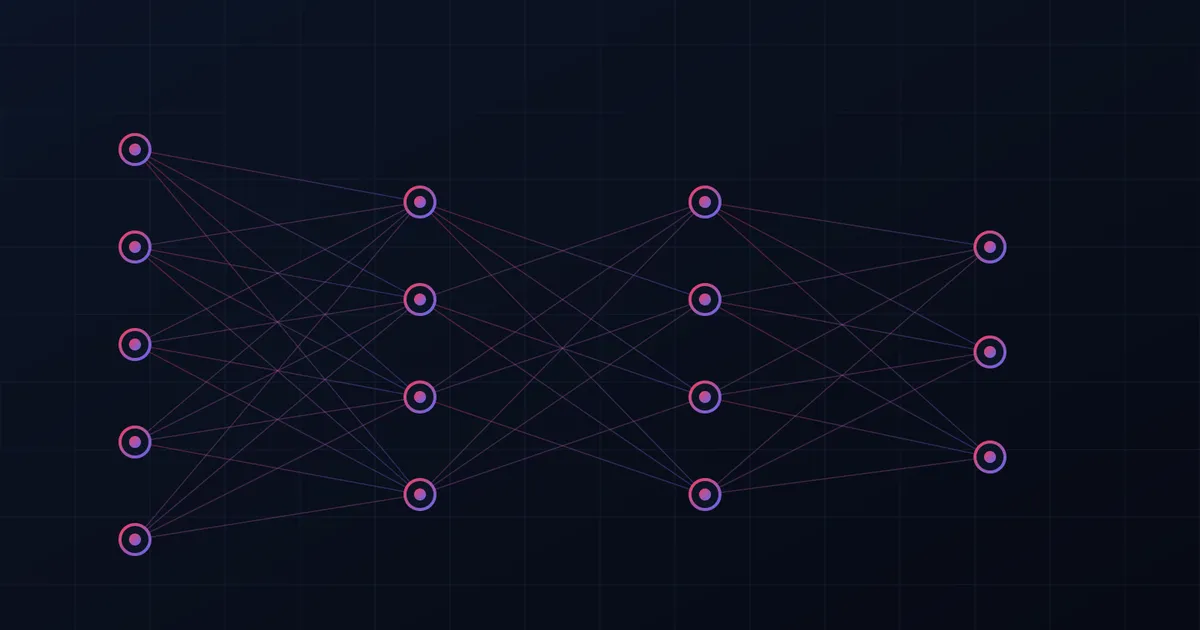
A vision-language model (VLM) is a model trained to understand images and text jointly, mapping both into a shared representation space so it can answer questions about an image, describe what’s in it, or reason about visual content using natural language. Where a traditional computer-vision model might classify an image into a fixed set of labels, a VLM can describe, compare, and reason about arbitrary visual content in open-ended language.
Why vision and language needed to be combined
Classic computer vision and natural language processing developed as separate fields with separate architectures. A convolutional network could tell you an image contained a “dog,” but it had no way to answer “what breed, and is it on a leash?” Language models, meanwhile, had no access to pixels at all.
The breakthrough was training both modalities into a shared embedding space, so that an image of a dog and the text “a dog on a leash” land near each other geometrically, regardless of which modality produced them. Once images and text share a representation space, a single model can be trained to move fluidly between them — captioning an image, answering questions about it, or generating an image from a description.
How VLMs are built and trained
Most modern VLMs share a common architecture pattern: a vision encoder (often a transformer-based model trained on image patches) extracts visual features, a projection layer maps those features into the same embedding space an LLM uses for text tokens, and the language model then processes both the projected image features and the text prompt together as a single sequence.
Training typically happens in stages:
- Contrastive pretraining. The model sees millions of image-text pairs and learns to pull matching pairs together in embedding space while pushing mismatched pairs apart. This is how the model learns that pixels and words describing the same thing should be “close.”
- Alignment and instruction tuning. The vision encoder’s output is connected to a pretrained language model, and the combined system is fine-tuned on tasks like image captioning, visual question answering, and multi-turn conversations that reference an image.
- Preference tuning. As with text-only models, a further round of tuning on human or model-generated preferences improves how well the VLM’s answers match what users actually want, rather than just what’s technically plausible.
This staged approach lets teams reuse an existing strong language model rather than training vision and language understanding from scratch together, which would require far more compute.
What VLMs are used for
VLMs power a broad range of applications that weren’t practical with text-only or vision-only models:
- Visual question answering — asking a model what’s happening in a photo, screenshot, or diagram and getting a natural-language answer.
- Document and UI understanding — reading a scanned form, a chart, or a web page screenshot and extracting structured information, which is why many coding and browser-automation agents rely on VLMs to interpret what’s on screen.
- Accessibility — generating detailed alt text and descriptions for images automatically.
- Multimodal search and retrieval — finding images by describing them in words, or finding relevant text by showing an image, both enabled by the shared embedding space (see retrieval-augmented generation for how retrieval systems generally work).
- Robotics and physical agents — grounding instructions like “pick up the red block” in what a camera actually sees.
This last category is a big part of why VLMs matter to the broader push toward capable AI agents: an agent that can only read text can’t act on a screenshot, a photo, or a live camera feed, but one built on a VLM can.
VLMs vs traditional computer vision
Traditional computer-vision models are typically trained for one narrow task — object detection, classification into a fixed label set, segmentation — and can’t generalize outside what they were trained on without retraining. A VLM trades some of that task-specific precision for open-ended flexibility: it can answer novel questions about an image it’s never seen anything like before, because it’s reasoning in language rather than matching against a closed set of labels.
This doesn’t mean VLMs replace specialized vision models everywhere. A dedicated object detector tuned for a specific industrial inspection task will usually be faster, cheaper to run, and more accurate on that narrow task than a general-purpose VLM. VLMs earn their keep when the task is open-ended, when natural-language reasoning about the image adds value, or when a single model needs to handle many different visual tasks without separate training runs for each.
Where VLMs fall short
VLMs inherit the general limitations of the language models they’re built on, applied to a new modality. They can misread fine details in an image, hallucinate objects or text that aren’t actually present, struggle with precise spatial reasoning (“what’s directly behind the third object from the left”), and have trouble with dense, small text in low-resolution images. Performance also varies a lot with image resolution and how the image is tokenized — a chart rendered at low resolution can lose the exact values a VLM needs to read it correctly.
As with any model, evaluating a VLM for a specific use case means testing it on your actual images and questions rather than trusting benchmark numbers alone — the failure modes are often specific to the visual domain (medical scans, hand-drawn diagrams, low-light photos) rather than something a general benchmark captures.
The takeaway
A vision-language model extends the pattern behind modern LLMs — predicting the next token from context — to a context that includes pixels as well as words, by training a vision encoder and a language model to share one embedding space. That’s what lets a single model caption a photo, answer questions about a screenshot, or ground an instruction in a live camera feed, all through the same natural-language interface. The tradeoff is flexibility over precision: for narrow, well-defined vision tasks, a specialized model still usually wins.
Tagged
Keep reading

 Chisato · · 5 min read
 Constrained Decoding: How LLMs Output Guaranteed JSON
Constrained decoding masks invalid tokens at each step so an LLM can only emit output matching a grammar, regex, or JSON Schema. How it works and its limits.
Chisato · · 5 min read LLM Logprobs Explained: Token Probabilities in Practice
Logprobs are the log probabilities an LLM assigns to each token it generates. What they mean, how to read them, and practical uses like classification.
Chisato · · 5 min read What Is a World Model in AI?
A world model is an AI system's internal simulation of how its environment changes, letting it predict outcomes before acting.