What Is a Leveraged ETF? Daily Reset, Explained
A leveraged ETF uses swaps and futures to deliver a multiple of an index's daily return — and daily resets mean long-term returns can diverge sharply.
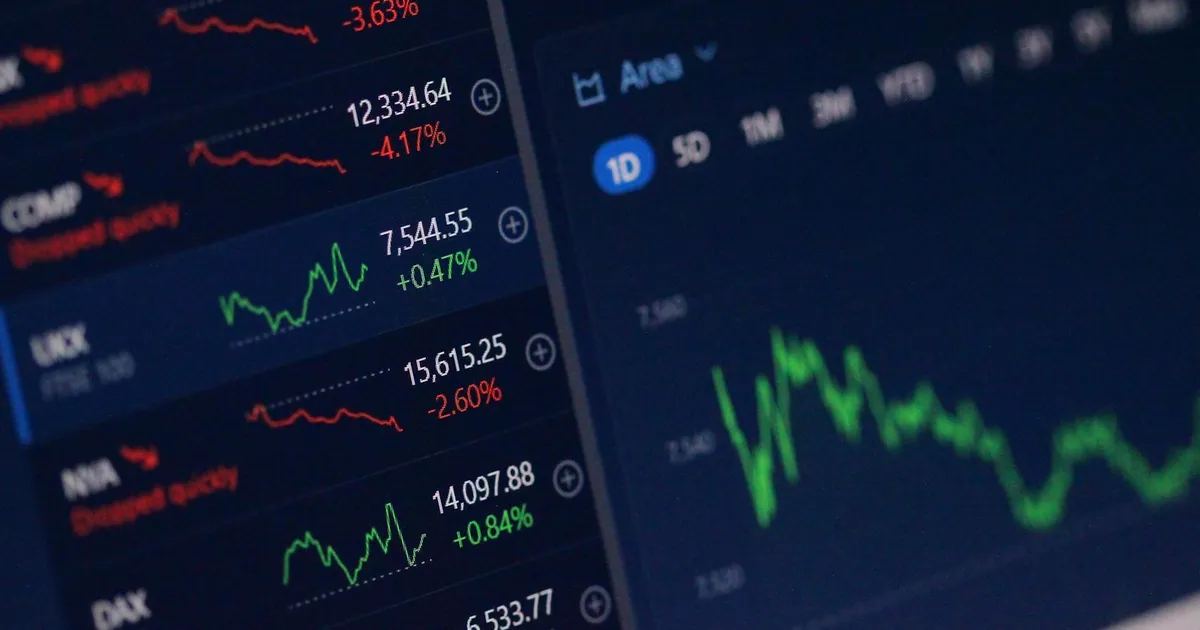
A leveraged ETF is an exchange-traded fund designed to deliver a multiple — typically 2x or 3x — of an underlying index’s return on a single day, using derivatives like swaps and futures rather than simply holding more of the underlying stocks. That “on a single day” qualifier is the whole story: because the leverage resets daily, a leveraged ETF’s return over weeks or months can diverge meaningfully from the stated multiple of the index’s return over that same period, even in a market that trends in the expected direction.
How the leverage is created
A leveraged ETF doesn’t achieve 2x or 3x exposure by simply borrowing money and buying more shares of the underlying index, the way an investor using margin might. Instead, the fund holds a mix of the underlying securities and derivative contracts — typically total return swaps and index futures — that are rebalanced daily to reset the fund’s exposure back to the target multiple. This derivatives-based structure is what makes daily leverage practical to offer as a fund at all; replicating it with borrowed cash and physical shares alone would be far less efficient to manage at fund scale.
The daily reset problem
The target multiple applies to each day’s return, not to the cumulative return over any longer period, and daily resetting introduces a mathematical effect often called volatility decay or compounding decay.
A simplified illustration: suppose an index starts at 100. On day one it rises 10%, to 110. On day two it falls 10% from that new level, to 99 — a net two-day loss of 1% for the plain index. A 2x leveraged fund tracking the same index would rise 20% on day one (to 120) and fall 20% on day two from that new level (to 96) — a net two-day loss of 4%, four times the index’s loss rather than exactly double it. The gap grows with volatility: a choppy, sideways-trending market can produce a real loss in a leveraged fund even when the underlying index ends roughly flat, purely because of how daily percentage gains and losses compound asymmetrically around a reset baseline.
This is why leveraged ETFs are structurally different from simply holding more shares on margin: a static leveraged position held without daily rebalancing wouldn’t exhibit this decay in the same way, because there’d be no daily reset baseline for the compounding to work against.
Inverse and inverse-leveraged funds
Some leveraged funds go the other direction — an inverse ETF aims to deliver the opposite of an index’s daily return (e.g., -1x), and inverse-leveraged funds combine both effects (e.g., -2x or -3x). These carry the same daily-reset compounding behavior as long leveraged funds, plus the underlying difficulty of a short-like position: if the index rises indefinitely, a -1x fund’s theoretical floor is a complete loss, the mirror image of how a leveraged long fund has theoretically unbounded upside.
Why they’re marketed as short-term tools
Fund providers are explicit in leveraged ETF prospectuses that these products are designed for short holding periods — often literally “intended for a single trading day” — precisely because of the daily reset mechanic. Holding one through a volatile, directionless stretch is the scenario where actual returns diverge furthest from what an investor might naively expect by just multiplying the index’s return by the fund’s stated leverage factor. This makes leveraged ETFs a fundamentally different tool from a plain index fund or ETF, which is generally marketed and used as a buy-and-hold, long-horizon vehicle rather than a short-term tactical position.
Leveraged ETFs vs other ways to get leveraged exposure
| Leveraged ETF | Margin (buying stock with borrowed money) | Options contract | |
|---|---|---|---|
| Leverage mechanism | Daily-reset swaps/futures inside the fund | Broker-provided loan against the position | Contract premium provides embedded leverage |
| Interest/financing cost | Embedded in fund expenses | Explicit margin interest charged by broker | Time decay (theta) instead of interest |
| Daily reset / decay | Yes, structural to the product | No — position size doesn’t reset daily | Not in the same sense, but value decays toward expiration |
| Liquidation risk | None beyond fund value going to zero | Margin call risk if equity falls too far | Contract can expire worthless |
| Typical intended holding period | Single trading day | Varies, investor-controlled | Varies, bounded by expiration |
An options contract provides leveraged exposure through a different mechanism entirely — a right rather than a resettable multiple — and comes with its own decay dynamics around time to expiration rather than daily compounding.
Where leveraged ETFs fit in a portfolio
Leveraged ETFs are generally treated as tactical, short-horizon instruments rather than core holdings. Their volatility and decay characteristics work against the basic logic of diversification and long-horizon compounding that underlies most buy-and-hold strategies, including approaches like dollar-cost averaging into a broad index fund. Investors comparing growth stocks to value stocks as a long-term allocation choice are answering a fundamentally different question than someone using a leveraged ETF to express a short-term directional view — the two aren’t really substitutes for one another.
The takeaway
A leveraged ETF uses derivatives to deliver a multiple of an index’s daily return, and that daily reset means longer-term returns can diverge — sometimes sharply — from simply multiplying the index’s longer-term return by the fund’s stated leverage factor. The divergence grows with volatility and can produce a loss even when the underlying index ends roughly where it started. That’s why these products are built and marketed around short holding periods, and why they function more as a short-term trading tool than a long-term portfolio building block.
Tagged
Keep reading

 Kurumi · · 5 min read
 What Is a Dual-Class Share Structure?
A dual-class share structure gives some shares more votes than others, so founders keep control with a minority stake. How it works and the trade-offs.
 Kurumi · · 5 min read
 What Is Deferred Revenue? Unearned Revenue, Explained
Deferred revenue is cash a company has received for goods or services it has not yet delivered. How it is recorded, recognized, and read by investors.
 Kurumi · · 5 min read
 What Is Operating Leverage? Fixed Costs and Profit Swings
Operating leverage measures how much a company's operating profit changes when revenue changes, driven by its fixed costs. How it works and why it matters.