What Is a Hardware Security Module (HSM)?
A hardware security module is a dedicated device that generates, stores, and uses cryptographic keys so private keys never leave secure hardware.
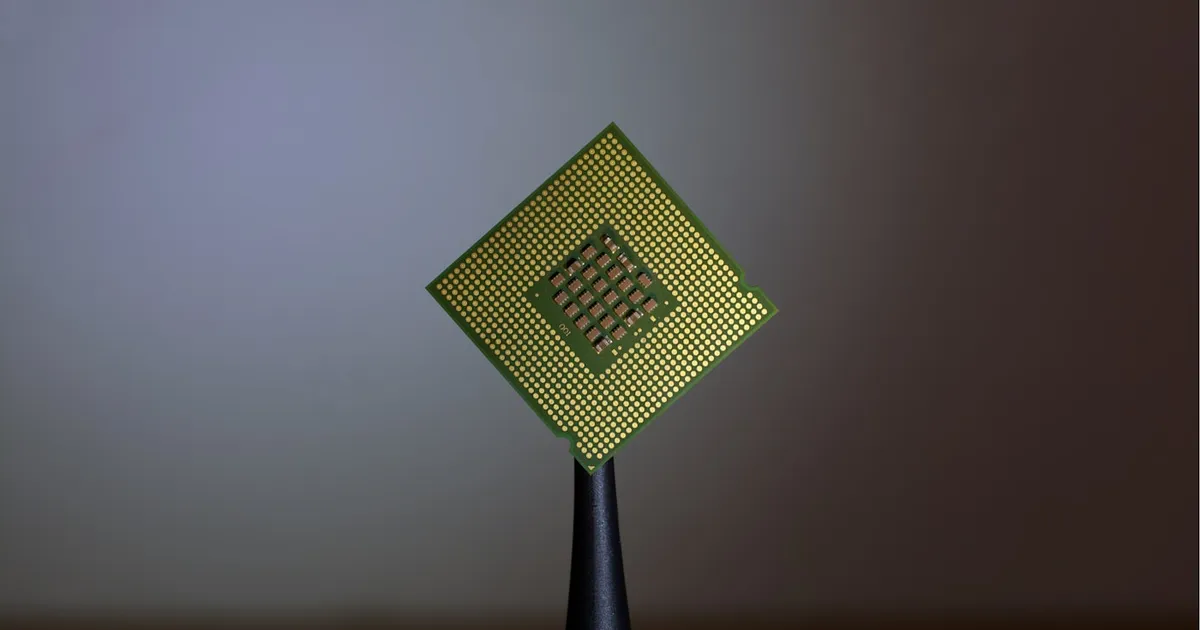
A hardware security module, or HSM, is a dedicated physical device built to generate, store, and use cryptographic keys without those keys ever leaving the device in plaintext form. Instead of a private key sitting on a general-purpose server’s disk — where a compromised OS, a misconfigured backup, or a malicious insider could expose it — the key lives inside tamper-resistant hardware, and the HSM performs the cryptographic operation on the server’s behalf.
What problem an HSM actually solves
Software-based key storage has a structural weakness: anything that can read the disk or the process memory of the machine holding the key can potentially extract it. Encrypting the key at rest helps, but the decryption key for that has to live somewhere too, and eventually the chain has to end at a secret sitting in memory during use.
An HSM breaks that chain by keeping the key inside dedicated hardware that’s designed to resist extraction even by someone with physical access. Applications never see the raw key — they send a request like “sign this data” or “decrypt this ciphertext” to the HSM, and the HSM performs the operation internally and returns only the result. The private key material never crosses back out.
This is the same principle behind how digital signatures work in general, applied with hardware isolation: the signing operation happens, but the private key stays put.
Tamper resistance, not just access control
What distinguishes an HSM from, say, a locked server running a key-management service in software is physical hardening. Most HSMs are certified against tamper-resistance standards and are built to actively destroy the keys they hold if someone attempts physical intrusion — drilling into the casing, probing the circuit board, or manipulating temperature and voltage to try to induce faults that leak key bits. A software key store can be copied; a properly designed HSM is built so that attempting extraction destroys the very thing you’re trying to steal.
That’s a meaningfully different threat model than symmetric vs asymmetric encryption choices or key length alone address — those are about the mathematics of the cryptography, while an HSM is about protecting the key regardless of how strong the algorithm is.
HSM vs TPM: similar idea, different scope
A TPM (Trusted Platform Module) is a hardware root of trust too, and the two are often confused because they share the same underlying goal — keeping keys out of reach of software. The difference is scope and role:
| HSM | TPM | |
|---|---|---|
| Typical location | Dedicated appliance or PCIe card, often shared across many servers | Soldered onto or embedded in a single device’s motherboard |
| Primary use | High-throughput signing/decryption for an organization’s workloads | Device identity, boot integrity, disk encryption keys for that one device |
| Performance | Built for high-volume cryptographic operations | Built for infrequent, security-critical operations |
| Typical deployment | Data centers, cloud key-management services | Laptops, servers, IoT devices |
In short: a TPM secures the one machine it’s attached to; an HSM is usually a shared service that many applications or servers call out to for cryptographic operations.
Where HSMs show up in practice
- Certificate authorities. The root and intermediate private keys behind PKI are typically generated and held in HSMs, since compromising a CA’s root key would let an attacker forge trusted certificates.
- Payment processing. Card networks and payment processors use HSMs to protect the keys used to encrypt and verify transaction data, since key exposure there has direct financial consequences.
- Cloud key-management services. Managed KMS offerings from major cloud providers are backed by HSMs under the hood, letting applications request encryption and signing operations through an API without ever handling raw key material — relevant to how encryption at rest vs in transit gets implemented at scale.
- mTLS and code signing. Organizations that need strong guarantees a signing key hasn’t leaked often keep code-signing certificates in HSMs so a compromised build server can’t exfiltrate the private key even with root access.
Tradeoffs
HSMs add real operational cost and complexity. Dedicated hardware appliances are expensive, and even cloud-based HSM services cost meaningfully more than software key storage. Every cryptographic operation now involves a network or bus round trip to the HSM instead of an in-process call, which adds latency that matters for high-throughput systems. And losing access to an HSM — through hardware failure or accidental key destruction via a tamper event — can mean permanently losing the ability to decrypt data protected by that key, unless a proper backup and multi-party key-ceremony process was followed.
Because of that cost, HSMs are generally reserved for keys where a compromise would be catastrophic — CA roots, payment processing, top-level signing keys — rather than being used for every application secret. This is where systems like post-quantum cryptography migrations get complicated in practice: rotating a key that’s been living safely inside an HSM for years is a deliberate, carefully planned operation, not a routine deploy.
The takeaway
A hardware security module keeps private keys inside tamper-resistant hardware and performs cryptographic operations on an application’s behalf, so the key material itself never has to be exposed in software. It’s a different layer of defense than choosing a strong algorithm or a long key — it protects the key regardless of how the surrounding software is compromised. Reach for one when the cost of a specific key leaking is severe enough to justify dedicated hardware and the operational overhead that comes with it.
Tagged
Keep reading

 Chisato · · 4 min read
 What Is a Side-Channel Attack?
A side-channel attack recovers secrets from a system's physical behavior — timing, power draw, cache access — rather than breaking its algorithm directly.
 Chisato · · 5 min read
 What Is Envelope Encryption? Data Keys and KEKs Explained
Envelope encryption encrypts data with a data key, then encrypts that key with a master key held in a KMS. How it works, why clouds use it, and key rotation.
 Chisato · · 5 min read
 What Is a Padding Oracle Attack?
A padding oracle attack exploits error messages during decryption to recover plaintext byte by byte, without ever breaking the cipher itself.