Stock Market Week Ahead: Retail Earnings, Fed Minutes
Home Depot, Target, and Walmart report and the Fed's July minutes land as the S&P 500 sits at records — a retail week to test the US consumer.
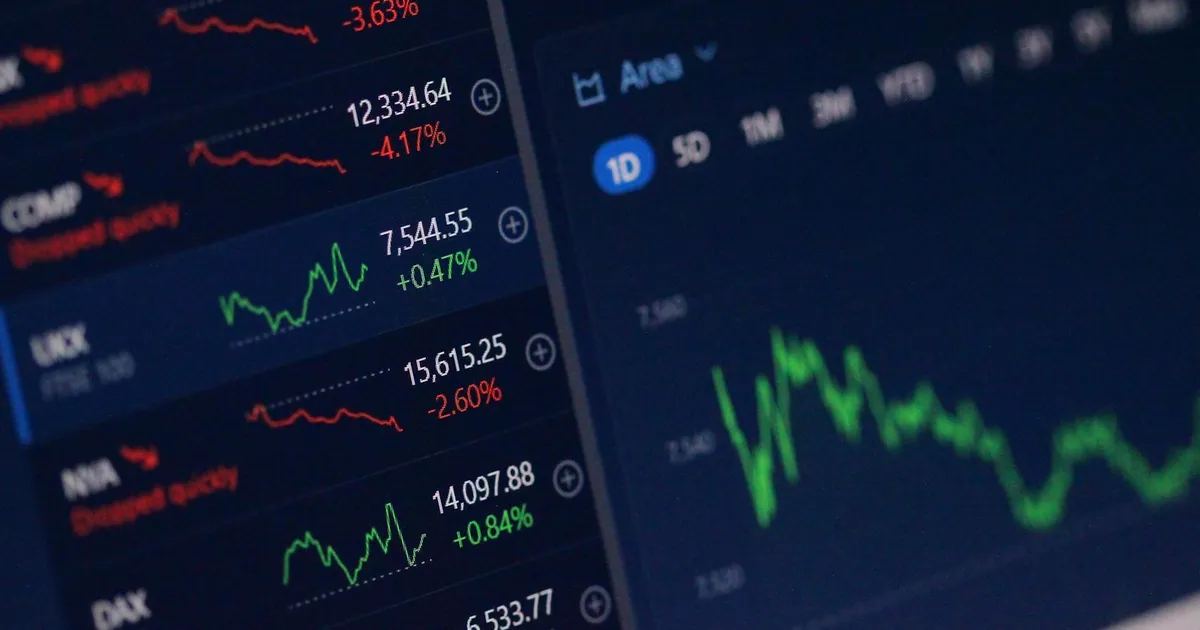
After a summer dominated by AI infrastructure headlines, the trading week of August 17–21, 2026 hands the microphone to the American shopper. The biggest names in U.S. retail report second-quarter results, the Federal Reserve releases the minutes of its late-July policy meeting, and both arrive with equity benchmarks pinned near record highs. It is a quieter calendar than the megacap earnings crush of late July — and precisely because of that, the retail prints and the Fed’s own words will carry outsized weight in setting the tone before the next leg of the AI trade runs through Nvidia later in the month.
The week’s marquee earnings
The reporting schedule is a walk up the income ladder, and investors will read it as one continuous story about consumer health.
Home Depot opens the week on Tuesday, August 18, offering the first read on big-ticket home-improvement spending and professional-contractor demand — a category that tends to soften first when households turn cautious about large discretionary outlays. Target and TJX Companies follow on Wednesday, August 19, bracketing the middle-income and value-seeking shopper: Target’s general-merchandise mix is sensitive to discretionary pullbacks, while off-price retailers like TJX often benefit when consumers trade down. Walmart closes the marquee slate on Thursday, August 20, the single most important tell on lower-income spending and grocery-inflation trends given its scale and its outsized share of American food retail.
The backdrop makes the reports more consequential than a typical late-season batch. Census data showed retail sales fell 0.6% from June to July, a sharp reversal from a roughly 0.2% gain in June and an approximately 1% increase in May. A single soft month is noise; a soft month heading into three of the largest retail earnings prints of the quarter is a setup. Guidance will matter more than the backward-looking beat: with the holiday quarter now in planning, any commentary on back-to-school demand, promotional intensity, or inventory posture will move these stocks and the broader consumer complex more than the headline EPS line.
The retail slate lands as the second-quarter season winds to a close. Through late in the prior week, 455 of the S&P 500’s 500 companies had reported, with 87% beating analysts’ earnings-per-share estimates and 68% topping revenue estimates — a strong aggregate that has helped power indices to fresh highs. The retailers are, in effect, the final chapter of a season the market has already graded favorably.
Fed minutes and the rate picture
The macro event of the week is the release of the minutes from the Federal Reserve’s July policy meeting. Minutes are not a decision — the policy rate is already set — but they are the closest thing markets get to hearing the committee argue with itself. Traders will comb the text for the balance of opinion between officials worried that inflation remains sticky and those more focused on cooling in the labor market and, now, softening consumer spending.
That reading feeds directly into expectations for the Fed’s next move and for Chair Jerome Powell’s remarks at the Jackson Hole symposium, scheduled for August 27–29. Jackson Hole has a history of being used to signal shifts in the policy stance, and the July minutes are the appetizer that shapes how the market positions for it. A set of minutes that leans toward patience on cuts would collide with a rates market that has grown comfortable pricing easing later in the year; minutes that acknowledge labor-market and spending softness would reinforce it.
The interplay between the retail reports and the minutes is the week’s real narrative. If Home Depot, Target, and Walmart corroborate the weak July retail-sales figure with cautious guidance, the disinflation-through-demand case strengthens — good for rate-cut odds, complicated for consumer-stock earnings power. Strong retail results would argue the opposite: a resilient consumer that keeps the Fed in no hurry.
A market at record highs
Prices set the stakes. The S&P 500 entered the week near all-time highs after touching a record the prior week and three the week before that. The rally has also broadened beyond megacap technology: the Russell 2000 index of smaller companies notched all-time highs three times in the prior week, a sign that the advance is no longer resting solely on a handful of AI names — a healthier internal structure than the narrow leadership that characterized parts of the first half.
Volatility, meanwhile, has been crushed. The Cboe Volatility Index (VIX) fell to new 2026 lows below 14.4, sitting around 14.5 as the week opened. A sub-15 VIX signals a market pricing in calm — but it also compresses the cushion. Low implied volatility means options protection is cheap precisely when complacency is highest, and it leaves indices more exposed to an outsized move if a retail miss or a hawkish set of minutes surprises a market positioned for continuation. Records plus a low VIX is a comfortable place to sit and an easy one to be caught leaning the wrong way.
For readers tracking how the tape got here, the recent run built on cooling inflation data and neocloud strength documented in the August 12 CPI and CoreWeave rally, and on the broader AI-euphoria advance that carried megacaps through the summer. This week tests whether the consumer economy underneath those AI-driven index gains is holding up.
The Nvidia shadow
Even a retail-and-Fed week is played in the shadow of the calendar’s main event. Nvidia reports fiscal second-quarter results on August 26, with Marvell Technology following on August 27 and Broadcom closing the AI-infrastructure earnings wave shortly after. Analysts broadly expect Nvidia revenue in the $93 billion to $95 billion range, driven by continued Blackwell-architecture adoption and hyperscaler capital spending.
That means this week functions partly as positioning ahead of the AI complex’s biggest single print. Nvidia’s disclosures have grown into events unto themselves — its recent 13F revealed a multibillion-dollar strategic equity portfolio tied to its own customers — and the stock’s reaction on August 26 will set the tone for the semiconductor group and the megacap indices into month-end. A benign retail week keeps the market’s risk appetite intact for that catalyst; a jarring one could see investors de-risk early. The market’s read on whether hyperscaler capital-spending momentum is durable will hinge on what Nvidia says next week, not this one — but this week decides how confidently traders carry positions into it.
Two smaller signposts round out the calendar: Fed minutes on the macro side and a light data week otherwise, leaving the retailers as the dominant fundamental input. Options expiration and late-August thin liquidity can also amplify moves, a technical footnote worth remembering when volume is seasonally low.
What it means
The week is a referendum on the U.S. consumer at a moment when the equity market has priced in a soft landing and then some. The setup is asymmetric: with indices at records and the VIX at 2026 lows, a lot of good news is already in prices, so clean retail beats may be met with a shrug while a disappointment has room to sting. The retailers most exposed are the discretionary names — Home Depot on big-ticket demand, Target on general merchandise — while Walmart’s defensive, grocery-heavy mix and the off-price model at TJX are better insulated if households are trading down. Watch the guidance and the gross-margin commentary more than the headline number; management’s tone on the back half of the year is what reprices a stock.
On the macro side, the July minutes and the retail data pull in the same analytical direction: both are inputs into whether the Fed cuts and how soon. Soft spending plus dovish minutes would cheer the rates market even as it dents consumer earnings power — a reminder that “bad news is good news” logic can still govern a late-cycle tape. The cleanest bullish outcome is resilient retail results and minutes that acknowledge room to ease; the messiest is weak retail and hawkish minutes, which would question both the earnings trajectory and the rate relief the market is counting on.
The larger frame is that this is the last quiet week before the AI complex retakes the wheel. Nvidia on August 26 and Powell at Jackson Hole on August 27–29 are the events that will actually define the path into September. This week’s job is to keep the consumer story intact enough that the market carries its record highs and its record calm into those catalysts — or to introduce the first crack in a rally that has, so far, refused to give investors a reason to sell.
Keep reading
 Kurumi · · 6 min read
 Stock Market Week Ahead: CPI, Oracle, Apple Event
A holiday-shortened week brings August CPI on Friday, Oracle and Adobe earnings Thursday, and Apple's iPhone event Wednesday. What to watch.
 Kurumi · · 4 min read
 August Jobs Report: 162K Beat Revives Fed Hike Bets
US payrolls rose 162,000 in August, nearly triple forecasts. The hot print pushed the 2-year yield to a 2025 high and lifted odds of a September Fed rate hike.
Kurumi · · 5 min read Snowflake Q2 FY2027 Earnings: Revenue, Guidance, Stock
Snowflake Q2 FY2027 product revenue rose 37% to $1.49B and full-year guidance was raised, sending shares up over 20%. The key numbers and outlook.