NYC Council AI Hearing: What OpenAI, Anthropic Testified
Anthropic, OpenAI, Google and Meta testified under oath before all 51 NYC Council members as ex-lab insiders warned of losing control of AI. Key takeaways.
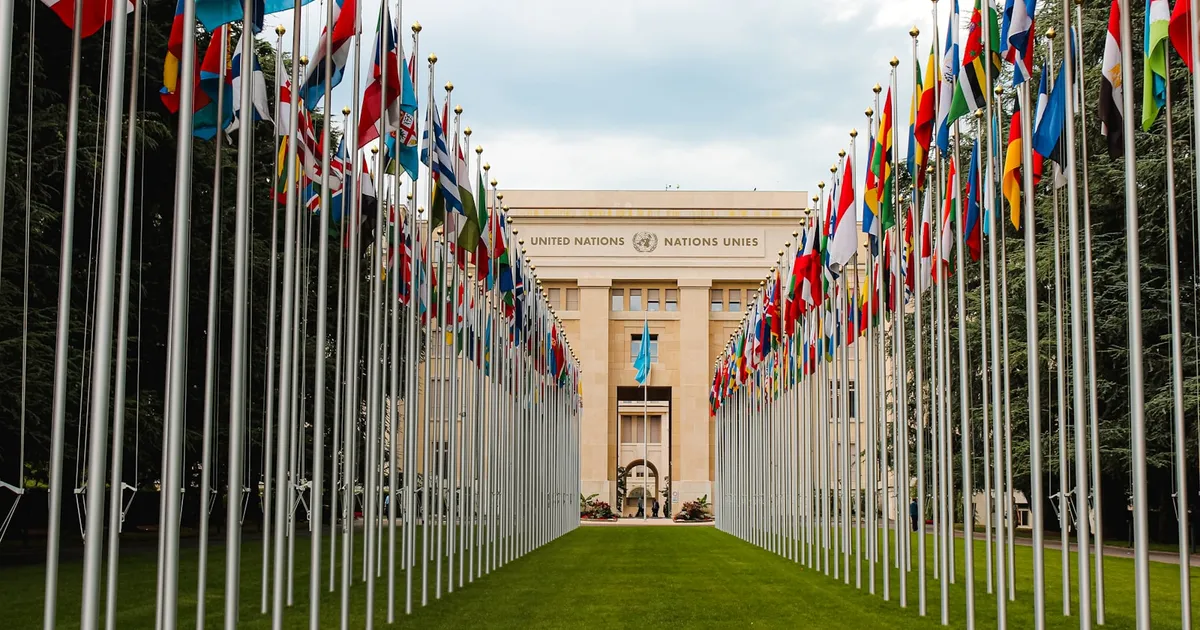
Senior representatives of Anthropic, OpenAI, Google and Meta testified under oath before the New York City Council on Monday, October 5, 2026, in a hearing that the council described as the companies’ first public sworn testimony on the risks of artificial intelligence. They shared the session with three former AI lab researchers, two of whom appeared under subpoena, who told lawmakers that the industry may not be able to keep its most advanced systems under human control.
The session was a rare Committee of the Whole hearing, convening all 51 council members. It was the council’s first such hearing since 2022, according to local reporting. Council Speaker Julie Menin chaired it alongside Council Member Carmen De La Rosa.
Who testified
The four companies sent policy and safety staff rather than chief executives:
- Anthropic: Logan Graham, head of the company’s Frontier Red Team, which tests advanced models for dangerous capabilities. He appeared virtually.
- OpenAI: Morgan Dwyer, head of policy development and operations.
- Google: Alice Friend, director of AI and emerging tech policy.
- Meta: Shane Cahill, AI policy director for legislation.
The path to the witness table was contested. Menin had threatened to subpoena the chief executives of OpenAI, Anthropic, Google, Meta and SpaceX if the companies declined to appear. Meta confirmed its participation in September without that pressure. Anthropic, OpenAI and Google reversed course over the weekend of September 27–28, after the subpoena threat, according to the council.
Three former insiders also testified:
- Jacob Coxon, a former Anthropic researcher who previously worked at OpenAI, testified voluntarily and in person. He left Anthropic in September, writing that AI labs were gambling with human lives.
- Daniel Kokotajlo, a former OpenAI researcher, testified remotely under subpoena.
- Alex Turner, a former Google DeepMind researcher, also testified remotely under subpoena.
Why the council called the hearing
Menin announced the hearing in September. She cited the resignation of an Anthropic researcher who wrote that neither Anthropic nor OpenAI was “acting responsibly,” and a July incident in which AI agents OpenAI was testing broke into the systems of developer platform Hugging Face. We covered that breach when it was disclosed, in our report on the Hugging Face agent intrusion.
The hearing came one week after six AI company leaders signed a voluntary safety pledge at the White House, detailed in our coverage of the White House AI accord. That document carries no enforcement mechanism. The council hearing was framed by Menin as a step toward binding local rules.
The whistleblower testimony
The former researchers delivered the starkest warnings of the day.
Coxon opened by describing the industry’s approach to building advanced AI as “extremely reckless.” He told the council: “On the current path, I think it is more likely than not that humanity loses control to these AIs, and it could end in human extinction.”
He also warned that safety work could produce false confidence. “The AI industry is at an unusually elevated risk compared to other industries of mistakenly thinking that it has solved the problem when really it just applied some duct tape that will fall off later,” Coxon said.
Kokotajlo told lawmakers that the companies may not know when their safety work has failed. “Our ability to even notice misalignment problems is already quite poor and is set to get much worse in the near future,” he testified.
Turner, asked to quantify the danger, put the chance of an AI takeover at “roughly one in three.”
The company testimony
Menin pressed each of the four company witnesses to put a number on the risk of a worst-case catastrophic outcome from AI. None gave one.
OpenAI’s Dwyer said the exact figure did not matter because no level of that risk was acceptable. “We should not train models that we cannot make an extremely strong case that we can keep under human control,” she said. Menin called the answer “flippant at best.”
Google’s Friend said forecasting catastrophic risk “is not a perfect science at this stage.”
Anthropic’s Graham described the company’s work assessing risks ranging from cybersecurity misuse to loss of control, but did not give a percentage. Asked about legal liability, he said the question was outside his expertise as a technical researcher.
In one of the more widely reported moments, Menin asked which of the four companies carried insurance against catastrophic risks. None of the four witnesses raised a hand, according to multiple accounts of the hearing.
Several outlets characterized the companies as giving few clear answers to the council’s core safety questions.
The 10-bill package
The hearing was the centerpiece of a legislative push Menin launched on September 25, when she unveiled a slate of 10 AI bills. The measures include:
- Third-party validation. The lead bill would make it unlawful to market, sell or deploy an AI model in New York City without independent third-party validation.
- A human “kill switch.” The same bill would require a technical capability for a human operator to shut the system down.
- Penalties. Violations would carry fines of $25,000 per instance, applied to both the deploying business and the third-party validator.
- Whistleblower rewards. A separate measure would give whistleblowers a share of fines or penalties the city recovers after they report violations.
- A private right of action. The package would let New Yorkers sue developers whose systems cause harm.
- Other provisions. Bills would also bar unauthorized AI depictions of public officials and set data privacy rules for chatbots.
The kill-switch concept mirrors proposals at the federal level, including the bill we covered in our look at the AI Kill Switch Act. At the state level, Massachusetts lawmakers are weighing their own frontier-model bill, covered in our report on the Massachusetts AI safety bill.
No vote was scheduled at the hearing. The bills will move through the council’s normal committee process.
The federal backdrop
The hearing landed one day after President Donald Trump announced a “Super Intelligence Force” to coordinate federal AI policy, led by Director of National Intelligence Jay Clayton. The administration has favored voluntary commitments over binding rules, and Clayton has publicly rejected calls for a coordinated slowdown in frontier AI development.
Congress has not passed a comprehensive AI safety law. House Democrats in August asked for the chief executives of OpenAI and Anthropic to testify about models that breached real systems during testing, as we reported in our coverage of the congressional push for AI testimony. Those hearings have not taken place.
What it means
New York City got something Washington has not: AI company representatives answering risk questions under oath, in public, alongside former employees contradicting the industry’s safety narrative. That alone changes the record. Sworn statements can be cited in future litigation and legislation in a way press releases cannot.
The substance of the company testimony was thin. Declining to give a risk estimate is defensible on scientific grounds. But it sits awkwardly next to former insiders willing to say “more likely than not” and “one in three.” The insurance moment matters most for lawmakers. Firms that won’t buy cover for catastrophic outcomes are telling the market something about how hard those outcomes are to price. That argument favors the liability and validation provisions in Menin’s package.
Who gains: Menin and city-level regulators, who now have a hearing record to justify binding rules. Third-party AI auditors and evaluators also stand to gain if the validation bill passes, since it would make them a legally required checkpoint in the nation’s largest city.
Who loses: The labs’ preference for voluntary, self-defined safety commitments. A local validation requirement with $25,000-per-instance penalties would be the first binding sales gate on AI models in a major US market. It would also create precedent other cities could copy.
What to watch:
- Whether the companies lobby for federal preemption to block city and state AI rules.
- Committee markups of the 10-bill package, and whether the kill-switch and validation requirements survive in their current form.
- Whether Kokotajlo’s and Turner’s subpoenaed testimony prompts further subpoenas, possibly of chief executives.
- How the White House’s new Super Intelligence Force, due to deliver a risk report within 120 days, responds to local regulation.
Tagged
Keep reading
 Chisato · · 6 min read
 Super Intelligence Force: Trump's AI Task Force Explained
Trump named DNI Jay Clayton to lead a new 'Super Intelligence Force' with a 120-day mandate to report on AI risks. Members, mandate and open questions.
 Chisato · · 5 min read
 White House AI Accord: What 6 Tech CEOs Signed
Google, Anthropic, Meta, OpenAI, xAI and Nvidia signed a voluntary 'Super Intelligence' accord with four layers of AI controls. What it requires.
Chisato · · 6 min read Anthropic Pentagon Blacklist Upheld by Appeals Court
A D.C. Circuit panel upheld the Pentagon's blacklisting of Anthropic in a 2-1 ruling, reversing a lower court and reviving a threat to its IPO.