Nvidia Q2 FY2027 Earnings Preview: What to Watch
Nvidia reports Q2 fiscal 2027 results on August 26. The Street sees roughly $93–95B in revenue against $91B guidance. Here's what matters for the AI trade.
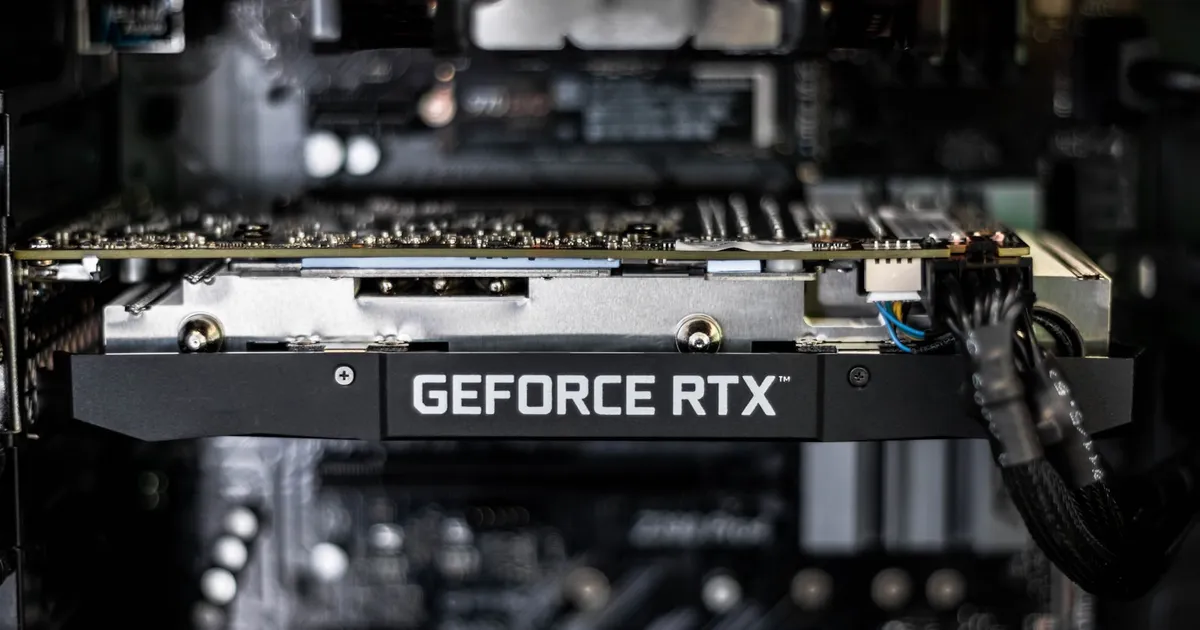
Nvidia reports fiscal second-quarter 2027 results after the closing bell on Tuesday, August 26, and no single print this earnings season carries more weight for the broader market. The chipmaker’s GPUs sit at the center of the AI infrastructure build-out, and its guidance has repeatedly reset expectations for every supplier and customer up and down the chain. With the stock trading near $219 and the semiconductor index at fresh highs, the report is being framed less as a company update than as a referendum on whether the AI trade keeps compounding.
What Wall Street expects
Analysts are modeling revenue in the range of roughly $93 billion to $95 billion for the July quarter, which would represent approximately 96% year-over-year growth. That consensus sits above the company’s own outlook: alongside its first-quarter report, Nvidia guided to revenue of $91.0 billion, plus or minus 2%, a figure that explicitly excludes any Data Center compute revenue from China. The gap between the Street’s number and management’s guidance reflects a now-familiar pattern in which analysts assume Nvidia will clear its own bar, as it has done for several consecutive quarters.
On profitability, Nvidia guided to GAAP and non-GAAP gross margins of 74.9% and 75.0%, respectively, plus or minus 50 basis points, with operating expenses of roughly $8.5 billion on a GAAP basis. Those margin figures are a closely watched line: as the mix shifts toward the most advanced accelerators and the cost of high-bandwidth memory and advanced packaging climbs, investors want confirmation that soaring revenue is still translating into industry-leading profit.
The stock reflects both conviction and caution. Nvidia is up roughly 18% year to date, and nearly every analyst covering the name rates it a buy. But valuations across the group have stretched, and the setup means an in-line quarter may not be enough — the market will be scrutinizing the forward guidance and management’s commentary on supply, not just the headline beat.
The data center is the whole story
As with every recent Nvidia quarter, the number that matters most is Data Center revenue. In the first quarter of fiscal 2027 — the most recently reported period — that segment generated $75.25 billion, up 92% from the prior-year period, as hyperscalers rushed to absorb Blackwell-generation compute capacity. Total company revenue that quarter set a record at $81.6 billion, and Nvidia paired it with the $91 billion second-quarter guide that Wall Street is now trying to beat.
Two forces drive the segment. The first is raw accelerator demand: cloud providers and AI labs are still ordering GPUs faster than they can be built, and Nvidia has described customer commitments stretching across multiple quarters. The second is networking — the InfiniBand and NVLink fabrics that stitch thousands of GPUs into a single training cluster. In the first quarter, demand for networking solutions tripled, a reminder that Nvidia sells not just chips but the systems that turn them into a data center.
The forward story is the transition to the next architecture. Investors will listen closely for any commentary on the Rubin platform — timing, sampling, and early customer engagement — because the pace of that ramp shapes how the market values Nvidia’s franchise into 2027. How management frames the handoff from the current Blackwell generation to Rubin will arguably matter more for the stock than the July-quarter revenue line itself.
The China question
The single largest variable in Nvidia’s guidance is one the company has chosen to zero out: China. U.S. export restrictions on advanced AI chips have made shipments into the region structurally uncertain, and Nvidia has excluded China Data Center compute revenue from its forward outlook entirely. In the first quarter, the company reported that it shipped no H20 compute products to the region.
That exclusion cuts both ways for the report. On one hand, it lowers the bar: any revenue that does materialize from China is upside to a guide that assumes zero. On the other, it caps the addressable market and leaves a large, previously significant customer base out of the model. Any update on the licensing environment, the status of China-specific parts, or management’s read on demand from Chinese hyperscalers would be a meaningful swing factor — and one of the harder lines for analysts to forecast.
The macro backdrop
Nvidia’s report does not happen in a vacuum. It follows a wave of hyperscaler earnings in which the largest cloud providers repeatedly raised their capital-spending plans, extending the AI capex boom that underwrites the entire accelerator market. Nvidia is the most direct beneficiary of that spending: every incremental gigawatt of AI data center capacity is potential demand for its GPUs and networking gear. The company’s results are, in effect, the clearest single read on whether those capex commitments are converting into orders.
The counterweight is the same one hanging over the whole sector. Memory prices, packaging capacity, and the sheer scale of committed spending have made investors jittery about whether the cycle is closer to its peak than its middle. Chip stocks endured a sharp drawdown in the summer — a broad reassessment of how much AI-driven growth is already priced in, rather than any single disappointing result, as seen when chip names sold off around TSMC’s July print. Nvidia’s guidance will be read as the definitive tell for that debate: a confident raise pushes back on the peak-cycle thesis, while cautious language would feed it.
There is also a competitive read-through in the other direction. AMD, whose accelerator franchise investors increasingly treat as a credible number two, delivered its own second-quarter results earlier in the month. Whatever AMD said about supply, memory availability, and customer ordering patterns has already shaped expectations heading into Nvidia’s report — and Nvidia’s numbers will in turn recalibrate how the market values the entire AI-hardware complex, from memory makers to the packaging suppliers.
What to watch on the call
Beyond the headline revenue and EPS, several details will move the stock:
- Data Center revenue and its growth rate. The segment is the overwhelming majority of the business; its sequential and year-over-year trajectory is the single most important number in the release.
- Guidance for the third quarter. With the stock up double digits year to date and valuations stretched, the forward number carries more weight than the backward-looking beat. A raise resets the peak-cycle debate; a hold or trim confirms the caution that has gripped the group.
- Gross margin direction. As the accelerator mix shifts and memory and packaging costs rise, margin trends are a key read on whether AI revenue is still translating into profit.
- Rubin commentary. Concrete signals on the next-generation platform’s timing and customer engagement matter more for the multi-year thesis than the current quarter’s shipments.
- China and export policy. Any update on licensing, China-specific parts, or demand assumptions is a direct swing factor given that the region is excluded from guidance.
- Supply and networking. Commentary on GPU supply, HBM availability, and the networking attach rate is a read-through for the entire supply chain.
What it means
Nvidia’s Q2 report is less a referendum on one company than a stress test for the AI-accelerator trade as a whole. The company has spent the past several quarters convincing the market that AI infrastructure demand is durable, and its stock reflects that argument having largely landed. That success is now the risk: expectations are elevated enough that meeting them may not satisfy a market accustomed to raises.
If Nvidia clears its $91 billion guide, matches the Street’s $93–95 billion expectation, and pairs the beat with a confident outlook and a clean read on the Rubin transition, it would be a direct rebuttal to the peak-cycle worries that have weighed on chip stocks since the summer. If instead the company guides cautiously, flags supply constraints, or signals softening in any major customer’s ordering, expect the sector’s recent nervousness to harden into something closer to a rerating.
Either way, because Nvidia sits at the apex of the AI supply chain, its numbers and its language will do more than move one ticker. They will set the tone for AI hardware valuations across the board — and for the hyperscaler capex assumptions that the entire trade rests on. For investors trying to gauge whether the AI build-out is still accelerating or beginning to plateau, the few hours after the closing bell on August 26 are the most informative on the calendar.
Tagged
Keep reading
 Kurumi · · 5 min read
 Nvidia AI Server Prices to Rise 15%+ on Memory Costs
Nvidia's server builders have told Microsoft, Google and Oracle that Vera Rubin and Grace Blackwell system prices will climb more than 15% from early 2027 as memory costs soar.
 Kurumi · · 6 min read
 Chip Stocks Brace for Nvidia Earnings, Jackson Hole
Semiconductor stocks enter a decisive week caught between a 19-year high in long-term yields and rate-cut hopes, with Nvidia's report Wednesday the main event.
 Kurumi · · 6 min read
 Nvidia-Amkor $1.5B Deal: US Chip Packaging Buildout
Nvidia is prepaying Amkor $1.5 billion to expand advanced chip packaging in Arizona, building a second CoWoS source outside TSMC. The deal and what's next.