Moonshot AI Sought Nvidia Blackwell GPUs in Europe
Kimi maker Moonshot AI discussed leasing 8,000-plus Nvidia Blackwell GPUs from European neoclouds, CNBC reports, testing a gap in U.S. export controls.
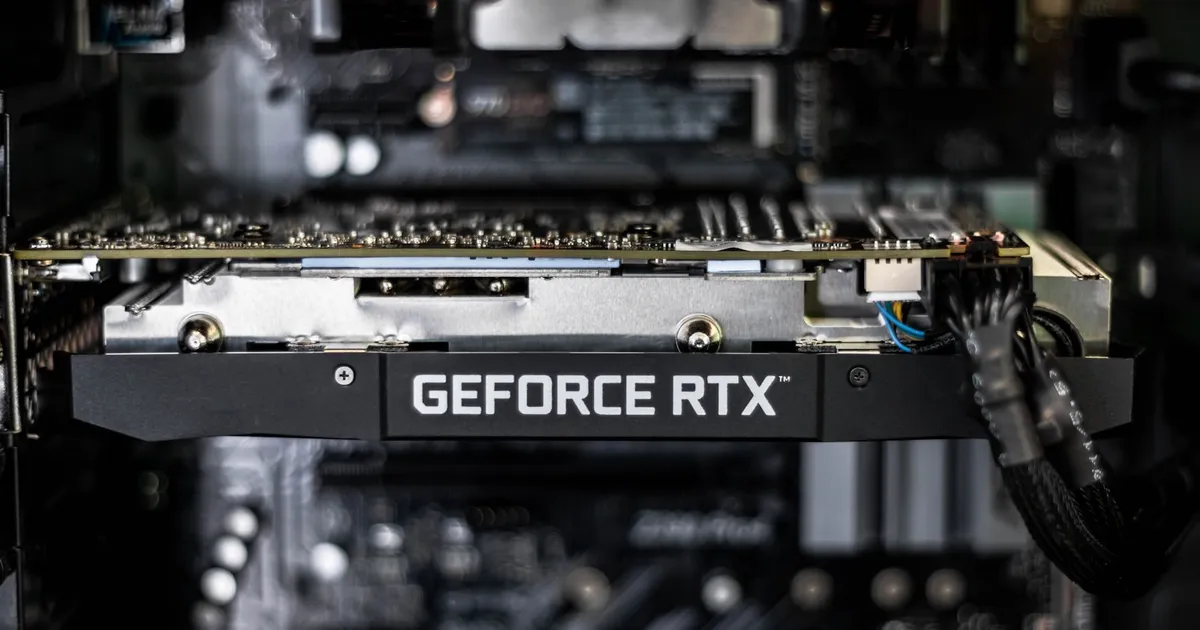
Moonshot AI, the Beijing-based developer of the Kimi models, held talks to lease Nvidia Blackwell computing capacity from cloud operators in Europe, CNBC reported on Thursday, November 5, 2026, citing four people familiar with the private discussions. According to the report, the talks involved clusters of 8,000 or more Blackwell GPUs, and at least some of the European discussions took place after July 2026.
The report shows how Chinese AI labs are trying to reach chips they cannot legally import. U.S. export controls effectively bar Nvidia’s Blackwell processors from being shipped to China. But current U.S. law does not give regulators broad authority over Chinese companies renting those chips remotely through cloud services hosted outside China. The Commerce Department has been working on a rule to close that gap since at least the summer, and a bill to do so has passed the House but not the Senate.
What CNBC reported
According to CNBC’s sources, Moonshot held talks with neocloud operators in Europe, the smaller GPU-rental companies that have grown alongside the hyperscalers over the past two years. CNBC’s sources did not name any European partner, and it is not known whether any deal was completed.
Tom’s Hardware, citing the report, said Moonshot was primarily interested in inference capacity, the compute used to serve a model to users, but also asked about training clusters. A cluster of 8,000 Blackwell GPUs would be large enough to serve a widely used model at scale or to run a substantial share of a frontier training run.
Nvidia has publicly described a growing European neocloud market, including Blackwell deployments in the United Kingdom, but its announcements do not connect any named European partner to Moonshot.
The Thailand precedent
The European talks follow an earlier dispute over Moonshot’s compute. In July, the White House said Moonshot had accessed Nvidia Blackwell chips through a facility in Thailand. On July 22, Michael Kratsios, director of the White House Office of Science and Technology Policy, accused the company of using banned Nvidia GB300 chips in Thailand and of covertly distilling Anthropic’s Fable model to build its Kimi K3 model. Treasury officials said at the time that sanctions and an Entity List designation were possible (see our coverage of the White House distillation allegations).
Moonshot has continued to grow despite that scrutiny. In September, the company confidentially filed for a Hong Kong IPO that people familiar with the plans said could raise about $3 billion at a valuation near $50 billion (see Moonshot AI’s Hong Kong IPO filing). Its Kimi models are among the most widely used Chinese open-weight systems (see What Is Kimi?).
Moonshot is not the only Chinese company reported to use overseas capacity. Previous reporting said Chinese tech giants including ByteDance, Alibaba and Tencent have tapped Nvidia compute through data centers in other Asian countries, including Thailand, Malaysia and Japan.
The regulatory gap
U.S. export controls are written around physical goods. The rules restrict shipping advanced chips, and in some cases the servers that contain them, to China and other restricted destinations. They do not clearly cover a Chinese company that connects over the internet to a cluster of chips sitting legally in a third country.
In August, The Information reported that the Commerce Department’s Bureau of Industry and Security (BIS) was drafting a rule that would stop Chinese AI firms from renting Nvidia GPU compute through data centers in third countries such as Thailand and Singapore (see our earlier report on the BIS remote access rule). Officials were expected to circulate a draft to trade groups as early as September. No final rule has been published.
Export-control lawyers have argued that BIS lacks the legal authority to regulate remote access under current law. One attorney described that view as “widely acknowledged” within the export-control bar. Closing the gap would likely require Congress to pass the Remote Access Security Act, which would apply export controls directly to remote access by a foreign person through a network connection, including the internet or a cloud service, from a location other than where the chip is physically installed. The bill has passed the House but still needs to pass the Senate and be signed by the president.
In the meantime, Nvidia has reportedly set its own limits. Reports say the company has told data center partners to cap how much capacity they sell to Chinese customers, but the reported threshold differs by outlet: Tom’s Hardware reported a cap of 49% of capacity for Chinese customers, while another outlet reported that partners must reserve at least 51% for non-Chinese customers. The two figures describe a similar policy, but neither has been confirmed by Nvidia.
A White House official said in earlier reporting on remote access that the administration “has implemented the most rigorous export control regime in modern history, and remains committed to safeguarding America’s national and economic security.”
Why Europe
Europe is a different case from Southeast Asia. Thailand, Malaysia and Singapore have been under growing U.S. pressure over chip diversion and are a focus of the BIS draft rule. European operators sit in allied countries with their own export-control regimes and close relationships with Washington, and they have generally been treated as low-risk destinations for advanced chips.
That status is what makes the report significant. If Chinese labs can rent large Blackwell clusters from European neoclouds, export restrictions focused on Southeast Asia will not be enough. Any remote-access rule would have to apply to operators in allied countries as well, which would create diplomatic friction and add compliance costs for European cloud companies that are trying to compete with U.S. hyperscalers.
What it means
The report suggests that chip export controls alone cannot stop Chinese AI labs from using the most advanced hardware. As long as a cluster is legally installed somewhere and connected to the internet, the question shifts from where chips are shipped to who is allowed to use them. Current U.S. law does not answer that question clearly.
Who is under pressure. European neoclouds are now in the spotlight. Many of them depend on Nvidia for chip allocations and on U.S. goodwill for future supply. Even without a final rule, operators that rent large clusters to Chinese labs risk losing access to Nvidia’s next generation of chips. Nvidia, for its part, has to balance strong demand from Chinese customers against the risk of more restrictive rules if it appears to be tolerating diversion.
What Moonshot gains or loses. For Moonshot, access to Blackwell-class inference capacity would help it keep up with U.S. labs on serving cost and speed. But the more publicly its compute sourcing is reported, the greater the risk of sanctions or an Entity List designation, which could complicate its planned Hong Kong IPO.
What to watch next:
- The BIS rule. Whether Commerce publishes its remote-access rule, and whether it covers allied countries such as those in Europe or only Southeast Asian hubs.
- The Senate. Whether the Remote Access Security Act advances. The incoming Democratic-controlled Congress could change its timing and priorities, though export controls on China have historically had support from both parties.
- Nvidia’s partner terms. Whether Nvidia tightens or confirms its reported cap on Chinese customers at cloud partners, and whether it starts naming partners that violate it.
- Treasury action. Whether the sanctions and Entity List threats raised in July are carried out against Moonshot.
The case also shows how much the U.S. strategy now depends on monitoring cloud usage rather than tracking shipments. That is harder for regulators to enforce, and it depends on cooperation from companies and governments outside the United States.
Tagged
Keep reading
 Chisato · · 6 min read
US Moves to Block China's Remote AI Chip Access
The Commerce Department is drafting a rule to stop Chinese firms from renting banned Nvidia AI compute through data centers in third countries.
 Chisato · · 6 min read
Moonshot Kimi K3: White House Alleges Fable Distillation
The White House accuses Moonshot AI of distilling Anthropic's Fable to build Kimi K3 and using banned Nvidia GB300 chips. Treasury threatens sanctions.
 Chisato · · 6 min read
China H200 Approval: Nvidia Chips for AI Firms
China is preparing to let Alibaba, ByteDance, and DeepSeek buy Nvidia's H200 — but capped under 200,000 chips. The reversal, the conditions, and what it means.