L&T to Build India's Largest Nvidia B300 AI Factory
L&T's Vyoma.AI will build India's largest Nvidia B300 AI Factory in Chennai — 10,000 GPUs for Together AI — under a Rs 10,000–15,000 crore order.
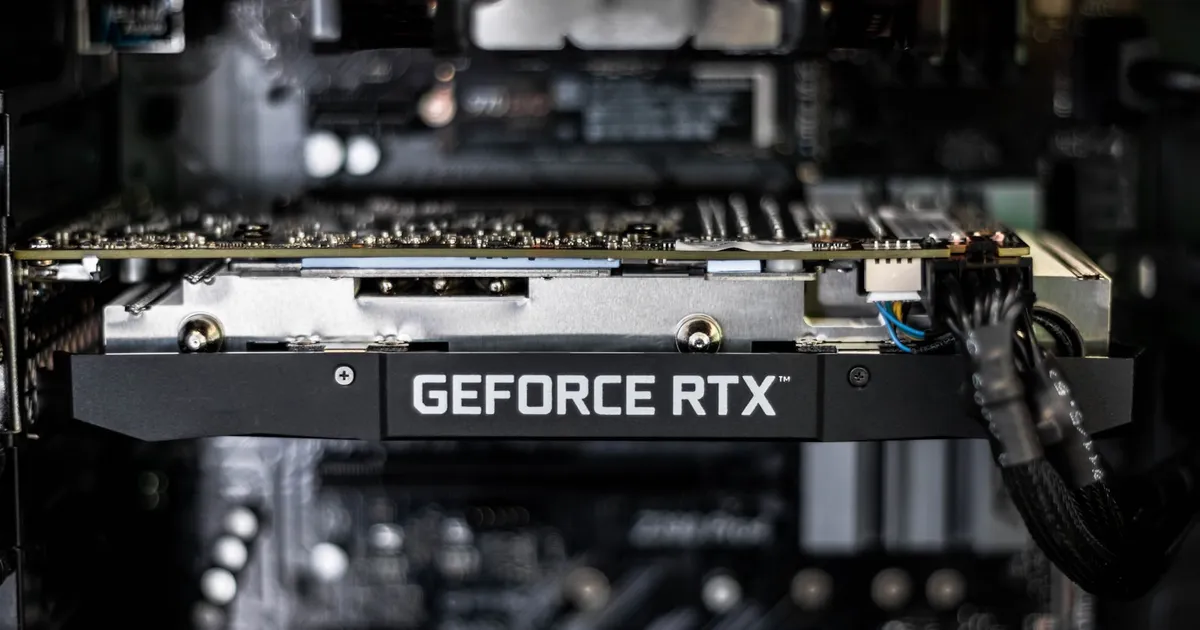
India’s largest engineering conglomerate is moving into the business of building AI supercomputers. On August 13, 2026, Larsen & Toubro (L&T) said its data-center arm, Vyoma.AI, had secured an order to construct what it described as India’s largest single-cluster Nvidia B300 AI Factory, a facility that will house 10,000 Nvidia B300 GPUs at a campus in Chennai to serve the US-based AI cloud provider Together AI. The company classified the win as a “Mega” order — its internal label for contracts valued between Rs 10,000 crore and Rs 15,000 crore (roughly $1.2 billion to $1.8 billion).
The deal marks L&T’s formal entry into the “AI factory” market — purpose-built, high-density compute campuses designed to train and run large AI models — and gives Together AI a major footprint in a market that Nvidia and a wave of neocloud operators have identified as one of the next great sources of AI demand.
The order
According to L&T, the AI Factory will be hosted at Vyoma.AI’s Chennai data-center campus and built out for Together AI’s AI-native cloud platform. Vyoma.AI is L&T’s data-center subsidiary, part of the group’s broader push into digital infrastructure alongside its traditional construction, heavy-engineering, and technology-services businesses.
The Rs 10,000–15,000 crore price tag places the project firmly in “Mega” territory under L&T’s own order-classification system, which reserves that designation for its largest contracts. For a company whose order book is dominated by roads, refineries, metros, and defense hardware, a compute build-out of this size signals how quickly AI infrastructure has become a line of business worth chasing.
L&T said the facility would underpin large-scale inference, fine-tuning, and training workloads for Together AI — the full spectrum of AI compute, from serving live model requests to customizing and building models from scratch. That breadth matters: inference in particular is where the volume lives as AI applications move from pilots into production, and it is the workload most sensitive to where capacity physically sits.
Inside the AI Factory
The 10,000-GPU cluster will be built around Nvidia’s B300 accelerators, the latest generation of the company’s data-center silicon aimed at frontier-scale training and high-throughput inference. Concentrating that many GPUs in a single cluster — rather than spreading them across smaller pods — is what lets operators train and serve the largest models efficiently, because the interconnect between chips becomes the bottleneck long before raw GPU count does.
L&T described the Chennai campus as a gigawatt-scale AI infrastructure site, with an initial phase designed for 250 MW of capacity and power infrastructure readiness of 150 MVA. Those figures point to a facility engineered for expansion well beyond the first cluster: a gigawatt of eventual capacity would put the campus among the larger AI sites anywhere, and the “power readiness” language underscores that electricity, not real estate or even chips, is increasingly the binding constraint on where these factories can be built.
Power is the through-line in nearly every large AI build-out this cycle. As we covered in the economics of AI data centers, the cost and availability of grid capacity now shapes site selection as much as network latency or land price. A 250 MW opening phase is substantial for India, where AI-grade data-center capacity remains thin relative to the country’s developer population and enterprise base.
Why Together AI is building in India
Together AI’s decision to anchor capacity in Chennai fits its strategy of positioning itself as the compute layer beneath open-weight AI models. The company, which recently raised $800 million at an $8.3 billion valuation, rents infrastructure to run and customize open-source models — a bet that the shift toward cheaper, openly licensed AI is durable and that a lasting business lives in the “picks-and-shovels” layer beneath it.
Building in India gives Together AI several things at once: proximity to one of the world’s largest pools of AI developers and enterprises, a hedge against the concentration of capacity in the US, and access to a market where data-residency expectations increasingly push customers toward compute that physically resides in-country. For workloads bound by local regulation or latency, a Chennai cluster is not interchangeable with capacity in Virginia or Texas.
The move also slots into a broader surge of foreign AI infrastructure investment in India. Hyperscalers and neoclouds alike have announced multi-billion-dollar commitments to the country over the past year, drawn by demand, talent, and government support for domestic compute. That capital is arriving even as some of it collides with local realities — as seen in the water-use protests around a large Google-Adani data center project, a reminder that gigawatt-scale campuses carry environmental and community costs that can slow build-outs.
L&T’s pivot into AI infrastructure
For L&T, the order is a statement of intent. The group has spent decades building the physical backbone of the Indian economy; Vyoma.AI extends that franchise into the digital backbone. Constructing and operating an AI factory demands a rare combination of capabilities — power engineering, high-density cooling, structured cabling, and the systems integration to stitch tens of thousands of GPUs into a working machine — and L&T is betting its heavy-engineering pedigree translates.
The competitive backdrop is a crowded field of specialized “neocloud” operators racing to stand up GPU capacity. Firms built specifically for AI workloads have posted explosive growth: CoreWeave’s record quarter and Nebius’s neocloud rally both showed triple-digit revenue jumps as demand for AI-grade compute outran supply, while incumbents like SoftBank’s SB Neo have launched to grab a share. L&T’s advantage is that it can build the physical plant itself rather than leasing it — a vertically integrated position few of the pure-play neoclouds hold.
Whether that edge translates into a durable AI-infrastructure business will depend on execution: bringing 10,000 GPUs online, keeping them fed with power, and delivering the reliability that a customer like Together AI needs to run production workloads. The first cluster is the proof point.
What it means
The L&T–Together AI deal is a data point in two larger stories at once. The first is the globalization of AI compute. For most of this cycle, the largest concentrations of GPUs have sat in the United States. A 10,000-B300 cluster in Chennai — serving an American cloud provider, but physically anchored in India — reflects how capacity is beginning to disperse toward demand, talent, and regulatory jurisdiction. Expect more of it: as inference volumes grow, the pressure to place compute near users and inside national borders only intensifies.
The second is the industrialization of AI infrastructure. When a legacy engineering conglomerate books a “Mega” order to build a GPU factory, AI has crossed from a software story into a heavy-industry one — closer to a power plant or a fab than to a web app. That shift favors players who can command power, land, and construction capacity at scale, and it recasts the constraint on AI growth from model quality to megawatts. L&T’s 250 MW opening phase, with room to reach a gigawatt, is a bet that the megawatts will be needed.
The near-term watch items are concrete: how fast Vyoma.AI can energize the first phase, whether the campus secures the power it has declared itself “ready” for, and whether Together AI’s India demand materializes at the scale a 10,000-GPU cluster implies. Winners in the immediate frame are Nvidia, which sells the silicon, and India’s ambitions to become a compute hub rather than only a talent exporter. The open question is execution — and, as with every gigawatt-scale project this year, the grid.
Tagged
Keep reading
 Chisato · · 5 min read
 Nvidia Australia AI Factories: 2 GW Buildout by 2027
Nvidia lined up eight Australian data center operators to build up to 2 GW of AI factory capacity by 2027, roughly doubling the nation's compute footprint.
 Kurumi · · 6 min read
 Gimlet Labs Raises $300M at $3B for Inference Cloud
Gimlet Labs raised $300M at a $3B valuation in a Series B led by a16z to scale its multi-silicon inference cloud for agentic AI. The backers, the tech, the stakes.
 Kurumi · · 6 min read
 Broadcom Q3 2026 Earnings: AI Chips Triple, Stock Dips
Broadcom's fiscal Q3 2026 revenue hit a record $29.6B as AI chip sales more than tripled to $16.7B, but light Q4 guidance sent the stock lower.