Cisco Nexus 9000 CVE-2026-20212: Root RCE Flaw
Cisco patched CVE-2026-20212, a CVSS 9.8 flaw letting unauthenticated attackers run code as root on Nexus 9000 switches. Affected models, ports, and fixes.
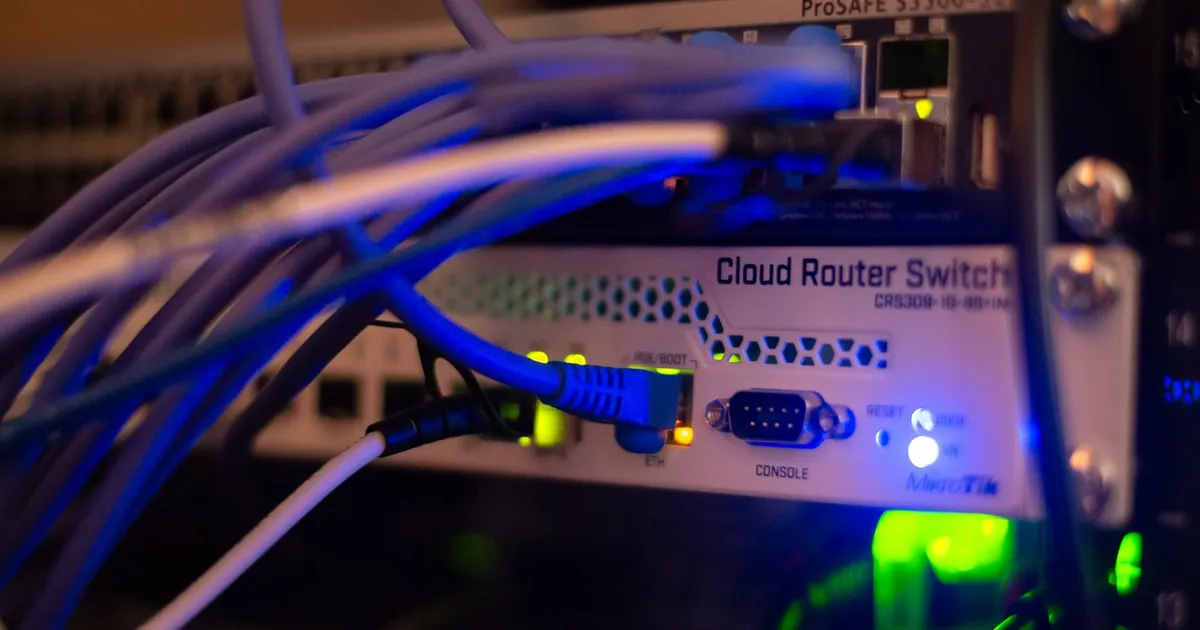
A flaw at the core of the data center has drawn one of the highest severity ratings Cisco assigns. On September 2, 2026, Cisco published an advisory for CVE-2026-20212, a vulnerability in select Nexus 9000 Series switches that lets an unauthenticated, remote attacker execute arbitrary code as root — full control of the device — with nothing more than network reachability. Cisco rated the bug Critical with a CVSS base score of 9.8, and released free software updates to close it.
Nexus 9000 switches are workhorses of enterprise and cloud networks, sitting at the aggregation and spine layers that move traffic between servers, racks, and the wider network. A flaw that hands an outsider root on one of those switches is not a peripheral problem; it is a compromise of the fabric that everything else rides on.
The vulnerability
According to Cisco’s advisory, CVE-2026-20212 stems from the affected switches binding a service to an unrestricted IP address, which leaves TCP ports 43210 and 43211 reachable in the default Layer 3 virtual routing and forwarding (VRF) instance. In plain terms, a service that should have been confined to internal use is instead listening where remote traffic can reach it.
An attacker exploits the flaw by sending specially crafted input to one of those exposed ports. The service interprets that input and executes it as code — with root privileges, the highest level of control on the device. Cisco’s own description of the impact is blunt: a successful exploit could allow the attacker to execute arbitrary code as root or, alternatively, crash a critical internal process and force the switch to reload.
What makes the rating so high is how little the attacker needs. Cisco says the flaw requires no valid account, no administrator credentials, and no existing foothold on the switch. An attacker needs only network connectivity to one of the affected device’s locally configured addresses on either vulnerable port. There is no authentication step to defeat and no privilege to escalate from — the path from “can reach the switch” to “owns the switch” is direct.
The vulnerability is tied to the switches’ underlying Silicon One architecture. It affects specific Nexus 9000 models built on that silicon rather than the entire product line, and Cisco’s advisory lists the affected platforms and the conditions under which they are exposed. The exposure hinges on the default VRF configuration that leaves the two ports reachable.
Code execution or a crashed switch
CVE-2026-20212 offers an attacker two distinct outcomes, and both are damaging.
The first is remote code execution as root. That is the worst case: an intruder who lands code on a spine or aggregation switch can potentially intercept, redirect, or tamper with traffic, pivot deeper into the network, and establish persistence in a place defenders rarely inspect. Network hardware sits below the operating systems, endpoint agents, and application logs that most security tooling watches, which makes a compromised switch both powerful and hard to detect.
The second outcome is a denial of service. Cisco notes that crafted input to the exposed ports can crash the S1HAL process — a hardware abstraction component — and cause the device to reload. An attacker who cannot or does not want to run code can simply knock the switch offline, and repeated attempts could keep a critical piece of the network bouncing. For an aggregation-layer device, an unplanned reload is an outage that ripples outward to everything downstream.
Exploitation status and the patch
As of the advisory’s publication, the news is comparatively good on one front. Cisco’s Product Security Incident Response Team (PSIRT) said it was not aware of any malicious use of the vulnerability, nor of any public announcements or proof-of-concept exploit code, at the time of disclosure. That gives administrators a window to patch before attackers reverse-engineer the fix — a window that historically closes fast for critical, network-reachable Cisco flaws.
Cisco has released free software updates that address CVE-2026-20212, and the company’s standard guidance applies: customers with a support contract should obtain fixes through their usual channels, and those without one can contact Cisco’s support organization. The advisory lists the fixed software releases and the migration paths for affected versions. As with any critical-rated flaw, upgrading to fixed software is the only complete remediation.
For organizations that cannot patch immediately, Cisco has documented a workaround. Administrators can apply infrastructure access control lists (iACLs) that permit only required management and control-plane traffic to the affected devices, or more specifically deny TCP traffic to the locally configured device addresses on ports 43210 and 43211. Restricting who can reach those ports removes the attacker’s route in. Cisco stresses, as it always does, that a workaround is a stopgap: it should be validated against the specific environment and treated as a bridge to patching, not a substitute for it.
Why network gear keeps landing on this list
CVE-2026-20212 arrives during a busy stretch for Cisco security. The company has issued a run of high- and critical-severity advisories across its networking and security portfolio this year, including a hard-coded-credential zero-day in its firewall management platform that drew a federal patch deadline — detailed in our coverage of the Cisco FMC zero-day CVE-2026-20316 — and a separate VPN denial-of-service issue described in our writeup of CVE-2026-20349 in Cisco ASA and FTD.
The pattern is not unique to Cisco. Infrastructure that runs quietly for years — switches, firewalls, management consoles, and the enterprise platforms bolted on top of them, such as the critical ServiceNow AI Platform flaws disclosed the same week — is exactly the kind of software that attackers now probe hardest, because a single unauthenticated flaw can unlock an entire environment. These devices are widely deployed, long-lived, and inconsistently patched, and they sit in privileged positions that make any foothold valuable.
What it means
For network and security teams, CVE-2026-20212 is a patch-now item, not a maintenance-window item. A CVSS 9.8, unauthenticated, root-level code execution flaw in a core data center switch is close to a worst case for network hardware, and the fact that no exploitation has been observed yet is a reason to move fast, not a reason to relax — the gap between a public advisory and a working exploit for reachable Cisco flaws is often measured in days.
The immediate defensive priorities are clear. Teams should inventory their Nexus 9000 fleet, identify Silicon One–based models that match the affected list, and confirm whether ports 43210 and 43211 are reachable in their environment. Where patching cannot happen at once, the iACL workaround should go in first, tightly restricting management and control-plane access to the switches. Exposure of those ports to any untrusted network — and especially anything internet-adjacent — should be treated as an emergency.
The broader lesson is one defenders keep relearning: the network fabric is part of the attack surface. Endpoint detection, application security, and identity controls all assume the plumbing beneath them is trustworthy, and a root-level flaw in a spine switch quietly voids that assumption. Segmentation of management planes, strict access control on device ports, and disciplined patching of infrastructure hardware are not glamorous work, but they are what keeps a single switch bug from becoming a whole-network incident.
Cisco’s disclosure gives administrators a head start. Whether that head start is used before someone weaponizes the flaw is, as always, the part that is up to the defenders.
Tagged
Keep reading
 Chisato · · 7 min read
 Cisco ASA VPN Zero-Day CVE-2026-20349: Patch Now
CVE-2026-20349 lets an unauthenticated attacker crash Cisco ASA and FTD firewalls with one HTTP request. It's exploited in the wild; CISA set a deadline.
 Chisato · · 6 min read
 Cisco FMC Zero-Day CVE-2026-20316: What to Patch
Cisco's on-prem Secure Firewall Management Center has a static-credential zero-day, CVE-2026-20316, under active attack. CISA set an August 1 patch deadline.
Chisato · · 5 min read N-able N-central CVE-2026-86218: CVSS 10 Pre-Auth RCE
CVE-2026-86218 is a CVSS 10.0 unauthenticated RCE in N-able N-central, exploited in the wild. CISA set a federal patch deadline of September 11.