China's 15th Five-Year Plan: $532B for AI Computing
China's new five-year plan targets 9,800 EFLOPS of intelligent computing by 2030 and 3.8 trillion yuan in infrastructure investment. Here's the scale and the stakes.
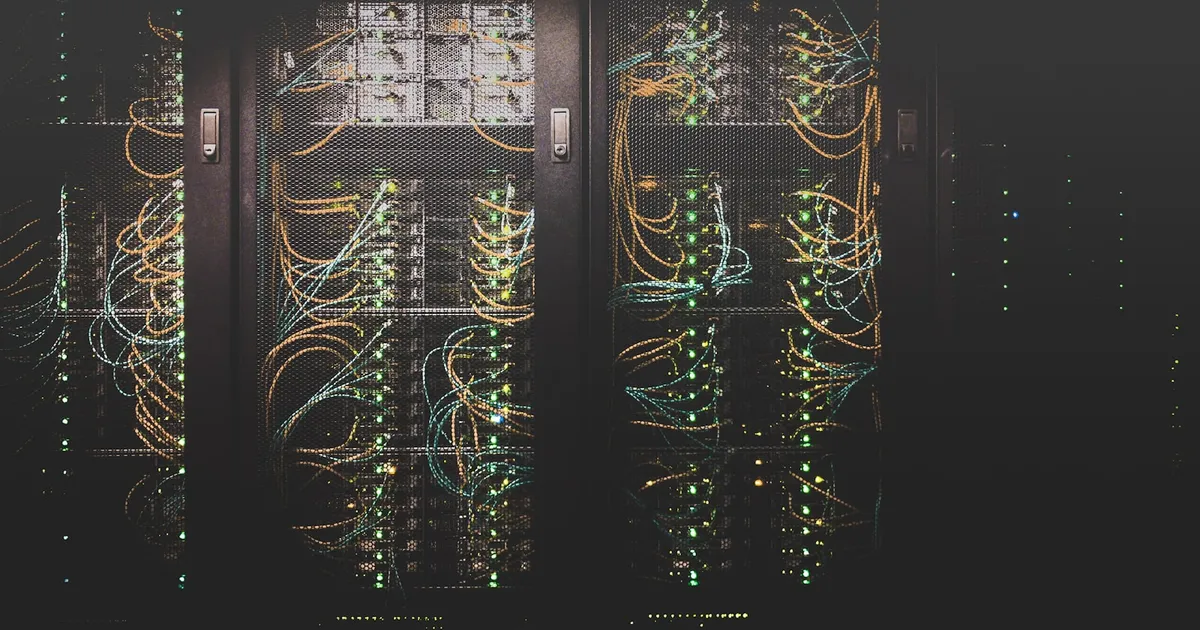
China has put a number on its next act in artificial intelligence. On September 7, 2026, the Ministry of Industry and Information Technology (MIIT) published the 15th Five-Year Plan for the information and communications industry, setting a national target of 9,800 EFLOPS of intelligent computing capacity by 2030 and calling for 3.8 trillion yuan — roughly $532 billion — in cumulative information-infrastructure investment across 2026 to 2030.
The plan reframes AI capacity as a matter of state policy rather than private capital expenditure. Where the debate in the United States is driven by the spending decisions of a handful of hyperscalers, China is coordinating a multi-year national buildout across compute, networks, and the industrial base that feeds them.
The headline targets
MIIT’s plan lays out 13 key indicators for the sector by 2030. Among the most significant:
- Intelligent computing power of 9,800 EFLOPS. An EFLOP, or exaFLOP, is one quintillion floating-point operations per second. The target represents roughly a fourfold increase over current capacity, and it specifically counts “intelligent” compute — the accelerator-driven horsepower used to train and serve large models, distinct from general-purpose data-center capacity.
- 3.8 trillion yuan in infrastructure investment. Cumulative spending on information infrastructure over the five-year window, spanning data centers, networks, and computing hubs.
- Industry revenue of 4.1 trillion yuan by 2030, with total telecom business volume growing an average of 7 percent per year.
- Connectivity milestones, including 50 5G base stations per 10,000 people and a 95 percent 5G user-penetration rate.
The compute figure is the one that matters most for the AI race. Serving frontier models at national scale is fundamentally a question of how many accelerators a country can deploy, power, and network together — and MIIT is treating that number as a planning target, not an aspiration.
Compute, power, and the chip problem
A commitment this size is best read as a coordinated program rather than a single project, and it has to solve three problems at once.
The first is compute itself — the accelerators that fill data centers. Here China faces a constraint the plan cannot wish away: U.S. export controls limit access to the most advanced Western GPUs, pushing Chinese operators toward domestic accelerators and whatever imported parts clear licensing. That makes the 9,800 EFLOPS target partly a bet on domestic silicon scaling up in both volume and capability.
The second is the manufacturing base. China has been pushing hard to build out home-grown capacity, including mature-node lithography and domestic memory, precisely because compute plans are only as credible as the supply chain underneath them.
The third is networking and placement. Reaching a national compute figure means more than stacking servers; it means tying geographically dispersed computing hubs into usable capacity — the logic behind China’s long-running effort to route workloads from the data-hungry east to the power-rich west, and a reason edge and distributed infrastructure feature heavily in the plan.
A state-scale bet, in context
The five-year plan is not China’s first large AI-infrastructure commitment in 2026. It follows an earlier $295 billion national AI infrastructure plan and sits alongside a broader push — from state-linked cooperation bodies to provincial compute subsidies — to treat AI capacity as national infrastructure on the order of highways or power grids.
That approach stands in contrast to the American model, where comparable sums are being committed by private firms: the capital-expenditure surge among U.S. hyperscalers and standalone pledges like OpenAI’s multi-hundred-billion-dollar compute spending are corporate decisions, not central plans. China’s advantage is coordination and staying power; its constraint is access to the highest-end hardware.
What it means
MIIT’s plan is a statement of intent: China will not let export controls or capital markets set the ceiling on its AI ambitions, and it is prepared to spend at national scale to prove it. The compute target — 9,800 EFLOPS by 2030 — is the metric to watch, because it converts a policy document into a measurable outcome that either materializes or does not.
Who benefits. Domestic accelerator designers, memory makers, and data-center operators gain a guaranteed, government-backed demand signal — the kind of certainty that justifies building fabs and factories. Chinese cloud providers and AI labs get access to subsidized capacity that lowers the cost of training and serving models at home.
The hard part. The plan’s credibility rests on domestic silicon. If Chinese accelerators cannot close the performance gap with restricted Western parts, hitting 9,800 EFLOPS will require far more chips, far more power, and far more money than the headline figures assume. Power availability, not ambition, may end up the binding constraint — as it increasingly is everywhere.
What to watch next. Look for the provincial implementation plans that will follow, the split between domestic and imported accelerators in new build-outs, and whether the compute target survives contact with the realities of the chip supply chain. The number is now official. Whether it is achievable is the question the next five years will answer.
Keep reading
 Chisato · · 5 min read
 Alibaba Raises $10.2B for AI, Launches Wan3.0 Video Model
Alibaba priced a record $10.2 billion Hong Kong share sale to fund AI infrastructure and launched Wan3.0, a new multimodal video model, as capex surges.
 Chisato · · 5 min read
 HUMAIN M3: Saudi Arabia's Arabic AI Model on MiniMax
Saudi PIF-backed HUMAIN unveiled humain-m3, a 428B-parameter Arabic model built on China's MiniMax M3, topping Arabic benchmarks in a research preview.
 Chisato · · 6 min read
 Google DeepMind WeatherNext 3: Hourly 5km AI Forecasts
Google DeepMind's WeatherNext 3 delivers hourly, up-to-5km AI weather forecasts with 15-day, 64-member ensembles and gains in cyclone prediction.