Cerebras Q2 2026 Earnings: Cloud Revenue Up 281%
Cerebras' Q2 2026 cloud revenue jumped 281% on the OpenAI ramp and it raised full-year guidance, yet the stock fell. The numbers, the RPO, and the warrant math.
The AI inference market got another data point on Monday, and it came from the company that bet its whole architecture on a single giant chip. Cerebras Systems reported second-quarter results that showed its fast-inference cloud business nearly quadrupling year over year, alongside a raised full-year outlook. And in a pattern that has become familiar this earnings season, the stock fell anyway.
Cerebras posted core revenue of $209.9 million, up 103% from a year earlier, according to the company’s results. The headline growth engine was the cloud: core cloud revenue of $127.7 million rose 287% year over year, and the broader cloud line came in around $126 million, up 281%. Management pinned the acceleration on surging demand for fast inference and, above all, the ramp of its OpenAI deployment. It was the kind of print that would normally send a high-multiple AI name higher. Shares slid instead.
What Cerebras actually sells
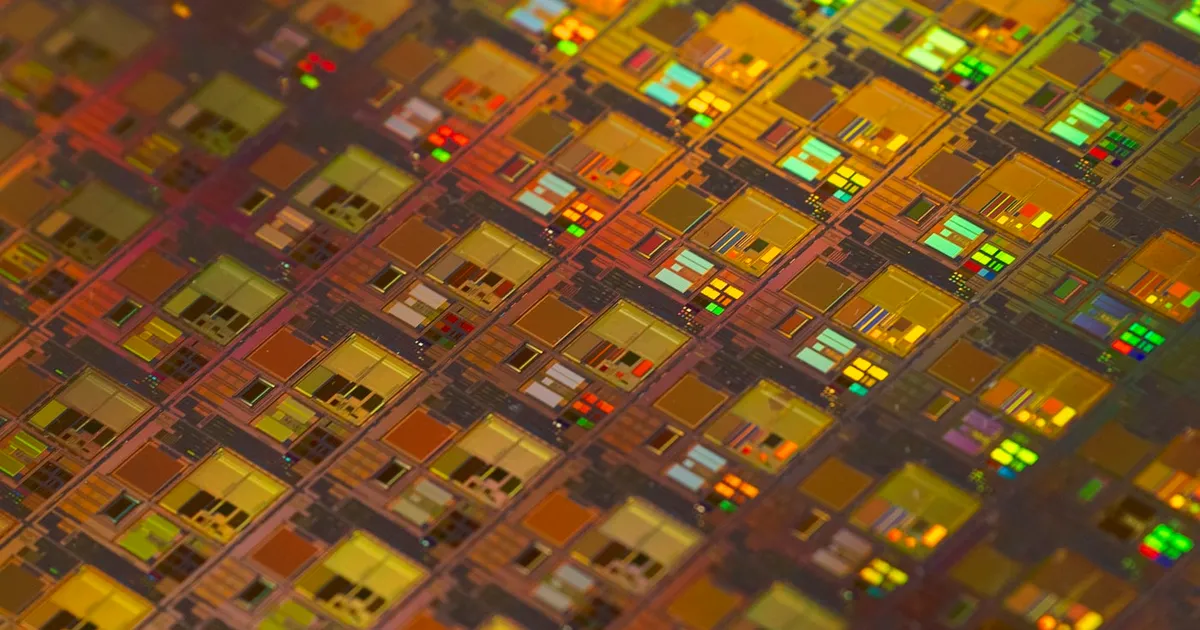
Cerebras is not a conventional chipmaker. Its flagship product is the Wafer-Scale Engine, a processor the size of an entire silicon wafer rather than a fingernail-sized die cut from one. The pitch is that keeping an enormous model resident on one massive chip — instead of splitting it across dozens of networked GPUs — slashes the latency of generating each token. That makes the company a specialist in fast inference: not training frontier models from scratch, but serving them back to users at very high speed.
That specialization matters for reading the quarter. The AI infrastructure story for the past two years has been dominated by training capex and the scramble for training clusters. Cerebras sits on the other side of the workload — the real-time inference that happens every time someone sends a prompt. As model usage scales from experiments to production traffic, inference volume is where a growing share of the compute bill lands, and Cerebras is arguing that its architecture wins on the metric users feel most directly: how fast the answer streams back.
The OpenAI ramp
The single most important line in the release is the OpenAI deployment. Cerebras management attributed much of the cloud surge to that customer’s ramp, and the concentration cuts both ways. On one hand, landing a marquee frontier lab as an anchor tenant validates the wafer-scale approach in exactly the workload it was built for. On the other, revenue that leans heavily on one customer carries obvious concentration risk — a dynamic investors have punished elsewhere in the AI supply chain.
The OpenAI relationship also complicated the reported numbers in a way worth understanding. Cerebras’ arrangement includes warrants — the right for OpenAI to buy Cerebras shares — and the accounting for those warrants reduced GAAP revenue in the quarter through a non-cash contra-revenue charge. That is why Cerebras leans on a “core revenue” figure that strips out the warrant math: it is trying to show the underlying commercial trajectory without the optics of a non-cash adjustment tied to a customer incentive. Investors will have their own view on how much weight to give a non-GAAP measure the company itself defines, but the mechanics are real and not a sign of weakening demand.
Guidance went up, not down
Crucially, Cerebras did not just beat on the trailing quarter — it raised the forward numbers. The company lifted its full-year 2026 core revenue outlook to $880 million to $890 million, up from a prior range of $855 million to $865 million. It guided third-quarter core revenue to $214 million to $216 million, implying continued sequential growth. And management said it expects core revenue to more than triple in 2027, a projection that only makes sense if the inference ramp it is seeing now is the leading edge of a much larger deployment curve.
Two balance-sheet figures underline the point. Cerebras ended the quarter with roughly $25.4 billion in remaining performance obligations — contracted business not yet recognized as revenue — and about $8.6 billion in cash, cash equivalents, restricted cash, and short-term investments. The cash pile reflects a May IPO that raised about $6.4 billion in gross proceeds, one of the larger AI-infrastructure debuts of the year. An RPO figure many multiples of annual revenue is the kind of backlog that, if it converts, supports the “triple in 2027” claim; the risk is always in the conversion and the timing.
Why the stock fell anyway
So why did a triple-digit grower that raised guidance trade lower? The most likely answer is the least dramatic: expectations. Cerebras came public in May at a rich valuation on exactly this narrative — hypergrowth inference, an OpenAI anchor, wafer-scale differentiation. When a stock is priced for a near-flawless ramp, a very good quarter that merely meets or modestly exceeds the bar can still disappoint, and a guidance raise from $855–865 million to $880–890 million is incremental rather than a blowout. This is the classic “sell-the-news” reaction, and it has recurred across AI names all summer.
There are also legitimate questions a skeptical investor can raise. Customer concentration in the OpenAI deployment. The reliance on a self-defined core-revenue metric while GAAP revenue absorbs warrant charges. A backlog that is large but back-end-weighted, with the biggest step-ups projected for 2027 and beyond. None of these are red flags on their own, but stacked against a premium multiple, they give fast money a reason to take profits. The reaction says more about the entry price than about the quarter.
The broader inference build-out
Cerebras’ print lands in the middle of a wider argument about where AI money is actually being made. Cloud names tied to AI capacity have posted enormous backlogs this cycle — CoreWeave’s contracted pipeline is the most-watched example — and the collective message is that demand for compute to serve models, not just train them, is scaling fast. Cerebras is a smaller, more specialized bet on that same thesis: that inference is a durable, growing workload with room for architectures beyond the incumbent GPU.
That thesis rides on the same capital-spending wave powering the rest of the sector. The hyperscalers and frontier labs are committing hundreds of billions to build out compute, and every dollar of that spend eventually needs to produce revenue-generating inference to justify itself. Companies like Cerebras are, in effect, a leveraged read on whether that end demand shows up in the volume the buildout assumes.
What it means
Cerebras delivered a strong operational quarter — cloud revenue up roughly 281%, core revenue up 103%, full-year guidance raised, and a projection to more than triple core revenue in 2027 — and the market’s shrug is a statement about valuation, not fundamentals. For a company priced for perfection at its May IPO, “great but not flawless” is enough to trigger a pullback.
The winners here are clear in the near term: Cerebras’ wafer-scale architecture is getting real production validation from the most demanding customer in AI, and a $25.4 billion RPO gives it a long runway if that backlog converts. The vulnerabilities are equally clear. Revenue concentrated in the OpenAI ramp means Cerebras’ fortunes are partly hostage to one customer’s roadmap and one customer’s warrants, and a non-GAAP core-revenue framing invites scrutiny when GAAP figures diverge.
What to watch next: the conversion of that RPO into recognized revenue over the coming quarters, whether the customer base broadens beyond OpenAI into a more diversified book, and how the stock trades into Nvidia’s late-August results, which will set the tone for the entire AI-hardware complex. If inference demand is as durable as Cerebras’ backlog implies, the quarter will look in hindsight like an early inning. If the ramp concentrates rather than broadens, the concentration risk investors flagged on Monday becomes the story. Either way, the argument that fast inference is a large and distinct market — not just a GPU sideshow — got a little stronger this week.
Keep reading
 Kurumi · · 6 min read
 Broadcom Q3 2026 Earnings: AI Chips Triple, Stock Dips
Broadcom's fiscal Q3 2026 revenue hit a record $29.6B as AI chip sales more than tripled to $16.7B, but light Q4 guidance sent the stock lower.
 Kurumi · · 6 min read
 Gimlet Labs Raises $300M at $3B for Inference Cloud
Gimlet Labs raised $300M at a $3B valuation in a Series B led by a16z to scale its multi-silicon inference cloud for agentic AI. The backers, the tech, the stakes.
Kurumi · · 5 min read Broadcom Q3 2026 Earnings Preview: AI Chips in Focus
Broadcom reports fiscal Q3 on September 2 with AI semiconductor revenue guided to $16 billion. Here's the setup, the numbers, and what to watch.